Stop losing money. Estimate your potential savings in 60 seconds.Calculate my ROI → →

Fleet & asset managementCentralize vehicles, assignments and insurance.Vehicle rentalCMMS, spare parts purchasing, inventory and orders.Maintenance & CMMSMonitor consumption, fuel cards and tank imports.Inventory managementReal-time tracking and safety.Purchasing & supplyRequests, suppliers, purchase orders and invoices.Asset managementRecords, assignments, multi-site inventory and integrated maintenance.Project managementBudgets, work packages, contractors and live progress.Geolocation & telematicsQuotes, freight, subcontracting and margins.TMS & transport managementBilling, cash management and ROI.Passenger transportManage missions, road expenses and HR.Construction logisticsDigitize approvals and alerts.Finance & TCOInvoicing, cash management and ROI.HR & peopleEmployee records, licence and training alerts, central files.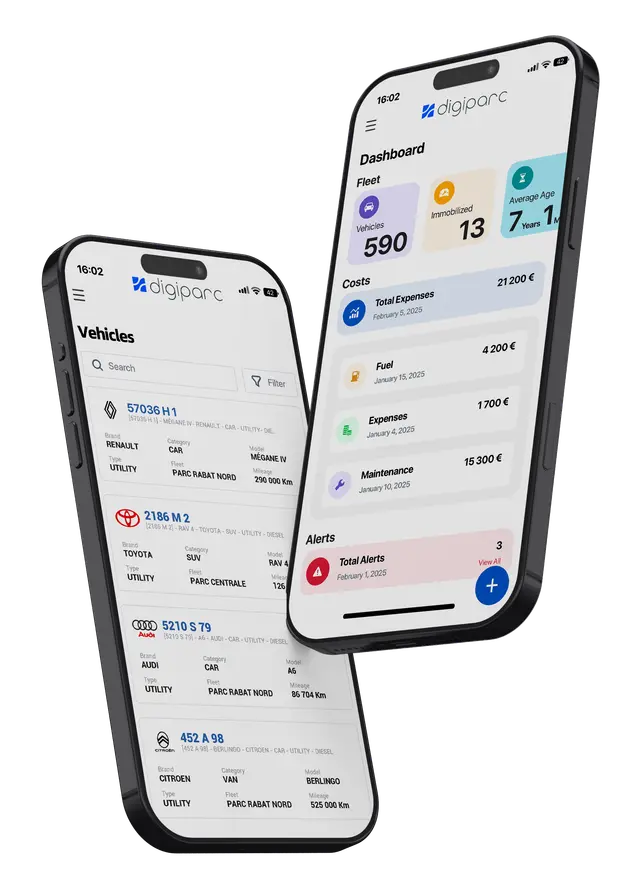
Digiparc MobileMobile
Dashboards, vehicle status and field operations — the same power as on desktop.
BlogIndustry news and trends.Let's Talk Fleet (podcast)Downloadable resources.White papers & guidesLive sessions with experts.Digiparc trainingComplete documentation.FAQTechnical reference for developers.Use casesCustomer stories.ROI calculatorEcosystem and integrations.TestimonialsCustomer stories.
.jpg "Comment utiliser des données de suivi GPS pour optimiser les itinéraires de transport")