Fleet managers spend a lot of time managing fleet costs. Many companies across different industries are turning to integrated fleet management software to effectively track cost of ownership (TCO), gain productivity, and improve fleet profitability.
In this article you will find relevant tips to improve your fleet cost management plan.
Fleet Cost Management Factors
Maintaining a fleet has many challenges, but managing fleet costs is perhaps the most complex mission. Failing to manage your fleet costs can negatively impact profitability and your organization as a whole.
Managing fleet expenses can be a headache, especially when calculating manually or through multiple spreadsheets. Fluctuating costs and hard-to-read data can cause you to miss important trends and gaps in your fleet. Optimizing your fleet cost management plan with fleet management software allows you to effectively track and analyze total cost of ownership (TCO).
Determine Total Cost of Ownership
The most difficult aspect of fleet cost management is calculating the true total cost of ownership (TCO) of your fleet. Understanding your TCO allows you to make data-driven decisions to better manage your fleet.
Fleet costs are divided into fixed and variable costs. Fixed costs are established costs that do not change regardless of usage. (taxes, stickers, insurance, etc.)
Variable costs vary depending on the size and usage of your fleet. Since fixed costs are predetermined, you can focus on how to improve fleet efficiency to reduce variable costs. (fuel, maintenance, spare parts, tolls, etc.)
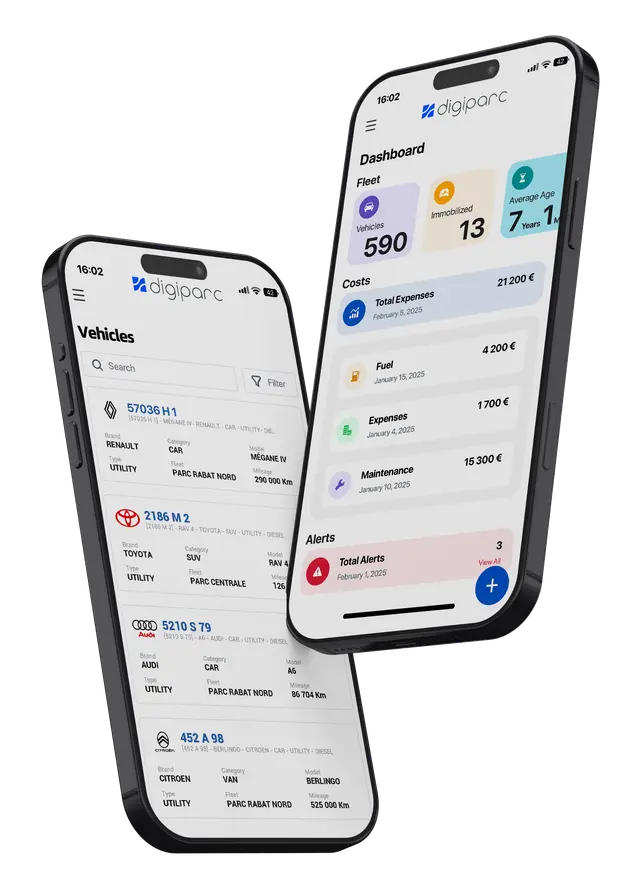
Fleet management software allows you to create custom reports to easily determine your total expenses and better control variable expenses.
Manage fuel expenses
Fuel is the largest ongoing expense for fleets. Although you can't control the price of fuel, there are ways to reduce and manage these common expenses.
Because fuel is a variable cost, monitoring costs and consumption on each of your assets is crucial. By tracking all fuel purchases, you can determine the average cost per mile to predict future expenses.
That said, trying to track fuel receipts and manually enter them into a spreadsheet is a poor use of time. To easily obtain an overview of your fuel expenses, consider using fleet management software to save more time and limit aberrant consumption.
Refine your fleet maintenance plan
One of the best ways to reduce fleet costs is to adopt a proactive strategy on preventative maintenance. Unplanned maintenance tasks happen, but if you don't properly maintain your assets, you would face increased downtime and unplanned expenses for your fleet.
A preventative maintenance plan keeps your fleet safe by staying on top of regular maintenance, oil changes and parts replacement.
With fleet management software, you will receive technical alerts, so you never miss a service. These notifications optimize availability and limit unnecessary expenses.
Improve your parts inventory
Parts account for more than a third of vehicle maintenance costs, so it's essential that you have a solid inventory management system in place.
While having the right parts is essential to keep up with maintenance tasks, you may be purchasing excess inventory that costs both money and space.
A sure way to control your inventory levels and reduce overspending is to use fleet management software to track quantities, receive reorder notifications, and assign parts to work orders.
Streamlining your fleet cost management using software saves you the hassle of data entry and searching for information in spreadsheets.
Reducing operating costs is an important and ever-present challenge for fleet managers. Discover with DIGIPARC how your fleet can reduce costs and operate more efficiently.