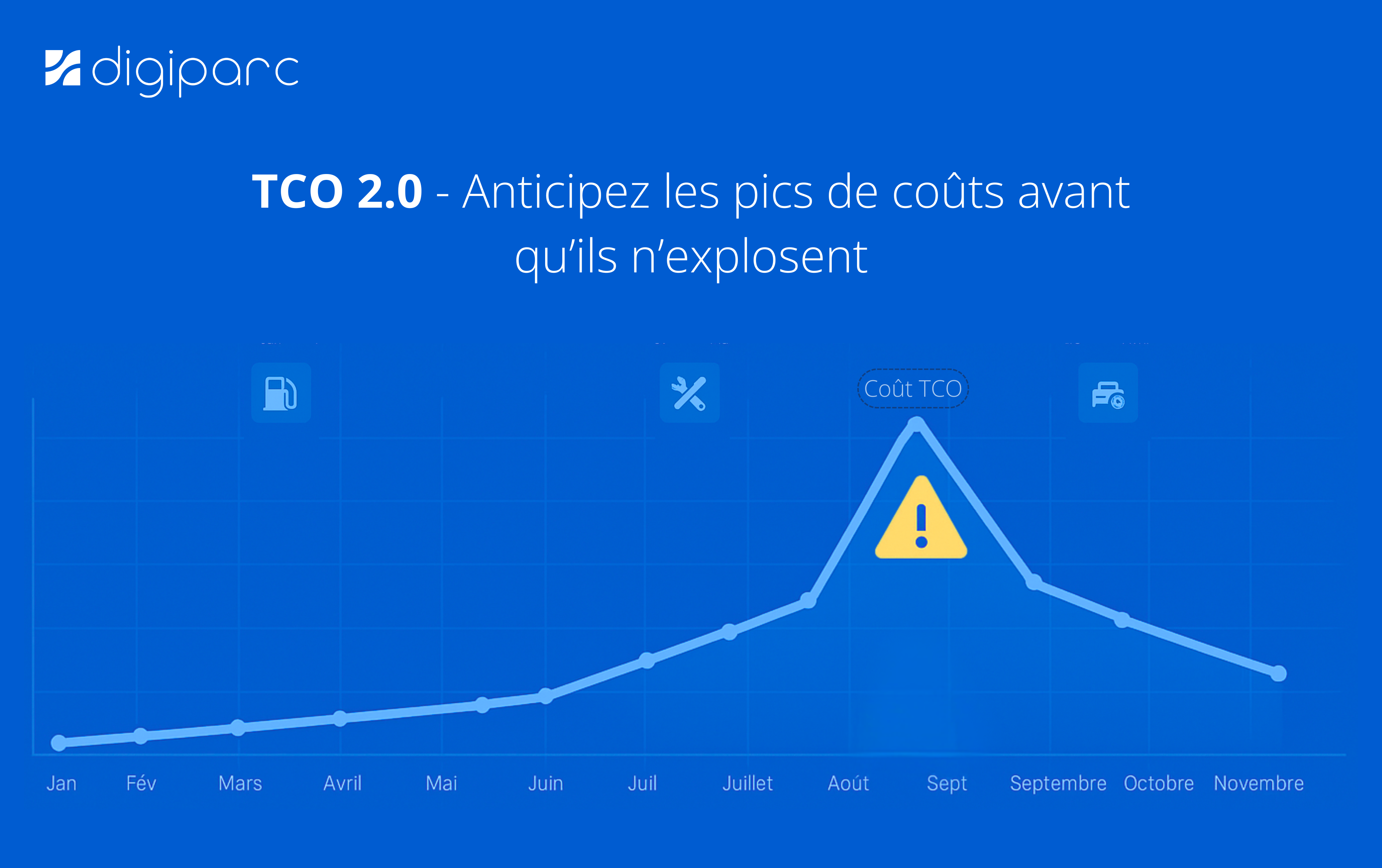
La gestion de flotte évolue rapidement. Alors qu’autrefois le TCO —Total Cost of Ownership— se calculait une fois par an sur un tableau Excel, il devient aujourd’hui un outil stratégique en temps réel, capable de prédire les dérapages budgétaires avant même qu’ils ne se produisent.
Bienvenue dans l’ère duTCO 2.0.
1. Pourquoi le TCO “à l’ancienne” ne suffit plus
Pendant longtemps, les gestionnaires de flotte ont dû composer avec un TCO théorique, basé sur :
- ⬝ des moyennes de consommation,
- ⬝ des prévisions de maintenance approximatives,
- ⬝ des coûts estimés,
- ⬝ des factures consolidées en fin d’année.
Ce modèle pose plusieurs problèmes :
- ⬝ Iln’intègre pas l’usage réeldes véhicules.
- ⬝ Il ne détecte pas lesdérives progressives(surconsommation, usure accélérée, incidents).
- ⬝ Il empêche d’identifierà quel moment un véhicule devient trop coûteux.
- ⬝ Il offre une vision statique — alors que la flotte vit, évolue et se dégrade jour après jour.
Résultat :
👉 Les dépassements budgétaires arrivent par surprise.
👉 Les décisions de renouvellement se basent “au feeling”.
👉 Des milliers d’euros peuvent être perdus sans s’en rendre compte.
2. Le TCO 2.0 : un indicateur vivant qui reflète la réalité de votre flotte
Le TCO moderne ne se contente plus d’additionner les dépenses.
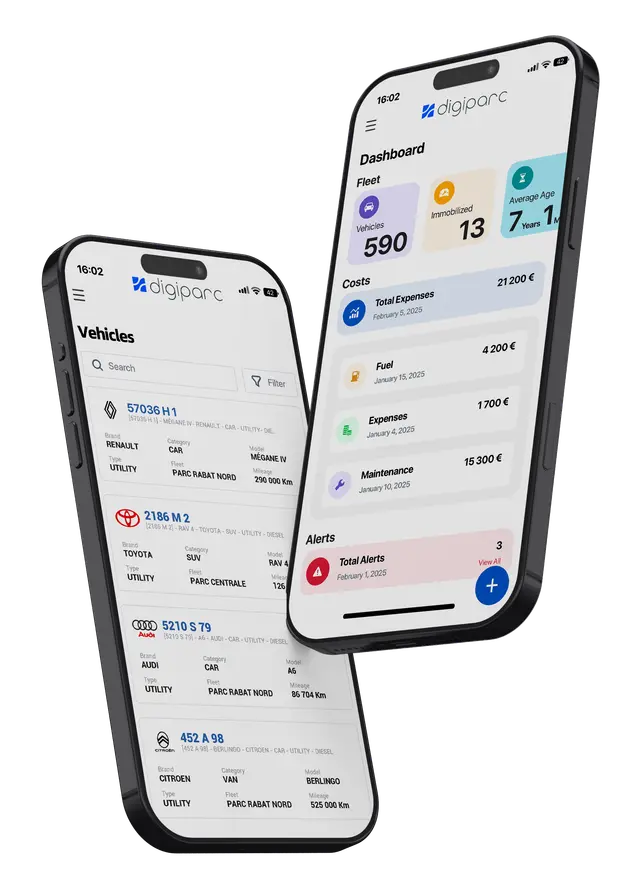
C'est untableau de bord intelligent, alimenté directement par les données terrain.
Les données-clés d’un TCO dynamique :
- ⬝ Carburant: consommation réelle, écarts par modèle, comportement de conduite.
- ⬝ Maintenance: historique, coûts par type de panne, récurrence, dérives.
- ⬝ Kilométrage réel: distance prévue vs distance effectuée.
- ⬝ Incidents & sécurité: collisions, freinages brusques, conduite agressive.
- ⬝ Dépréciationbasée sur l’usage, et non sur une valeur cataloguée.
Ce que cela change :
- ⬝ Vous voyezen directles véhicules qui “coûtent trop cher”.
- ⬝ Vous anticipez lessurcoûts à 1, 3 ou 6 mois.
- ⬝ Vous identifiez les véhicules àremplaceravant qu’ils ne deviennent une bombe budgétaire.
- ⬝ Vous optimisez vos achats, vos entretiens et vos tournées.
Le TCO 2.0 n’est plus un chiffre.
➡️ C’est unthermomètre financierde votre flotte.
3. L’IA : le moteur du TCO prédictif
Là où le TCO classique regarde le passé, leTCO 2.0 regarde l’avenir.
Grâce à l’intelligence artificielle, il est désormais possible de :
- ⬝ repérer desanomalies invisibles à l’œil humain,
- ⬝ prédire lesprochaines pannes probables,
- ⬝ estimer lescoûts futursde chaque véhicule,
- ⬝ simuler plusieursscénarios budgétaires.
L’IA analyse :
- ⬝ l’évolution des consommations,
- ⬝ la fréquence des maintenances,
- ⬝ l’usure des pièces,
- ⬝ les comportements à risque,
- ⬝ les patterns de panne.
Elle peut alors dire :
- ⬝ « Ce véhicule va coûter 12% de plus le mois prochain »
- ⬝ « Son remplacement est optimal dans 4 mois »
- ⬝ « Sa consommation anormale vient d’un sous-gonflage chronifié »
- ⬝ « Une défaillance batterie est probable dans 3 semaines »
👉 Ce passage duréactifauprédictifgénère des économies massives.
4. Cas concret (réaliste, tiré du terrain)
Une flotte de 40 véhicules enregistre unehausse progressive du carburant.
Sur un tableau Excel, l’écart ne serait visible qu’en fin d’année.
Avec un TCO dynamique :
- ⬝ L’outil détecte unesurconsommation de 9%sur 12 véhicules.
- ⬝ L’IA identifie les causes :
- ⬝ Pneus sous-gonflés
- ⬝ Conduite agressive sur 3 chauffeurs
- ⬝ Filtres à air non remplacés sur 5 véhicules
Après correction :
➡️ 11 800 € économisésen seulement 6 mois.
C’est ça, la force du TCO 2.0.
5. Comment Digiparc transforme le TCO en avantage compétitif
Digiparc permet aux gestionnaires de flotte de passer du TCO théorique auTCO intelligent :
- 📍 Tableau de bord TCO en temps réel
- 🚨 Alertes automatiques en cas de dérive
- 🔧 Maintenance préventive & prédictive
- 🔍 Analyse fine carburant / usure / incidents
- 📈 Scénarios budgétaires avancés
- 🕒 Optimisation des renouvellements avant dépassement des coûts
Vous n’attendez plus les mauvaises surprises :
➡️ Vous les évitez.
Conclusion : le TCO 2.0 est le nouveau super-pouvoir du gestionnaire de flotte
Les gestionnaires qui utilisent encore un TCO statique pilotent avec une visibilité limitée.
Ceux qui exploitent leTCO dynamique et prédictif :
- ⬝ réduisent leurs coûts,
- ⬝ prolongent la durée de vie utile de leurs véhicules,
- ⬝ prennent des décisions plus rapides et plus justes,
- ⬝ sécurisent leur budget,
- ⬝ optimisent toute la performance de leur flotte.
👉 Le TCO n’est plus un calcul financier.
👉 C’est un levier stratégique.