
Module · CMMS
Details Interviews
Details Interviews
This section provides an in-depth presentation of the interview plans available in the system. It provides users with a structured and detailed view, facilitating the management and monitoring of each interview. Essential information is clearly displayed, providing a complete understanding of maintenance needs and planned actions.
With this organized interface, managers can easily review different plans, compare their details and ensure they meet operational requirements and maintenance standards. This clarity makes it possible to quickly identify priorities or specific interviews, optimizing resource management and intervention planning. By making information accessible and transparent, this overview promotes effective and informed decision-making, while contributing to the performance and longevity of equipment.
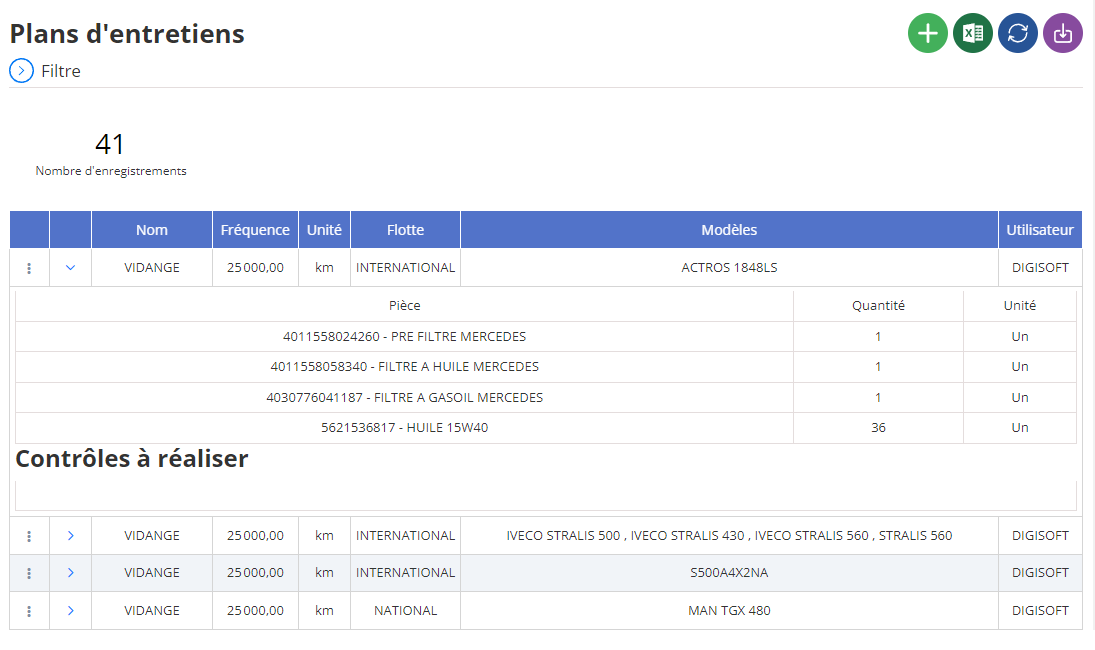
Displaying interview plans in list
In the central section of the interface, the interview plans are presented in the form of a well-structured table, where each line corresponds to a specific interview. The columns provide key information needed for effective management. Here are the fields available in this list:
-
Piece: This column indicates the name or designation of the part concerned by the maintenance plan. It allows for rapid and accurate identification, ensuring that each part receives the attention required to maintain its proper functioning.
-
Quantity: This field mentions the exact number of parts necessary for the maintenance plan. This information is essential to anticipate resource needs and to avoid interruptions due to lack of equipment.
-
Unit: This column specifies the unit of measurement associated with the quantity (for example, "parts", "liters", "hours"). This precision helps to standardize the data and facilitates communication between the different actors involved in interview management.
The tabular presentation provides users with clear and comprehensive visibility of interview plans, allowing them to prioritize actions according to needs and availability. With this well-organized data, it becomes easier to monitor the condition of parts and plan necessary interventions.
By centralizing all essential information, this system helps improve coordination between teams, reduce maintenance times and minimize costs linked to poor planning. It represents a strategic tool to guarantee proactive management of maintenance and to maximize the durability of equipment.