Module · CMMS
Diagnostics List
Diagnostics List
The section dedicated todiagnosticsprovides an in-depth and detailed overview of technical assessments carried out in vehicle management. This functionality allows users to access clear and precise information on each diagnosis carried out, thus contributing to rapid and informed decision-making for vehicle monitoring and maintenance.
By centralizing all data relating to diagnostics, this section constitutes an essential tool to guarantee rigorous monitoring of vehicle performance. It not only makes it possible to detect existing problems, but also to anticipate possible failures, thus contributing to proactive fleet management.
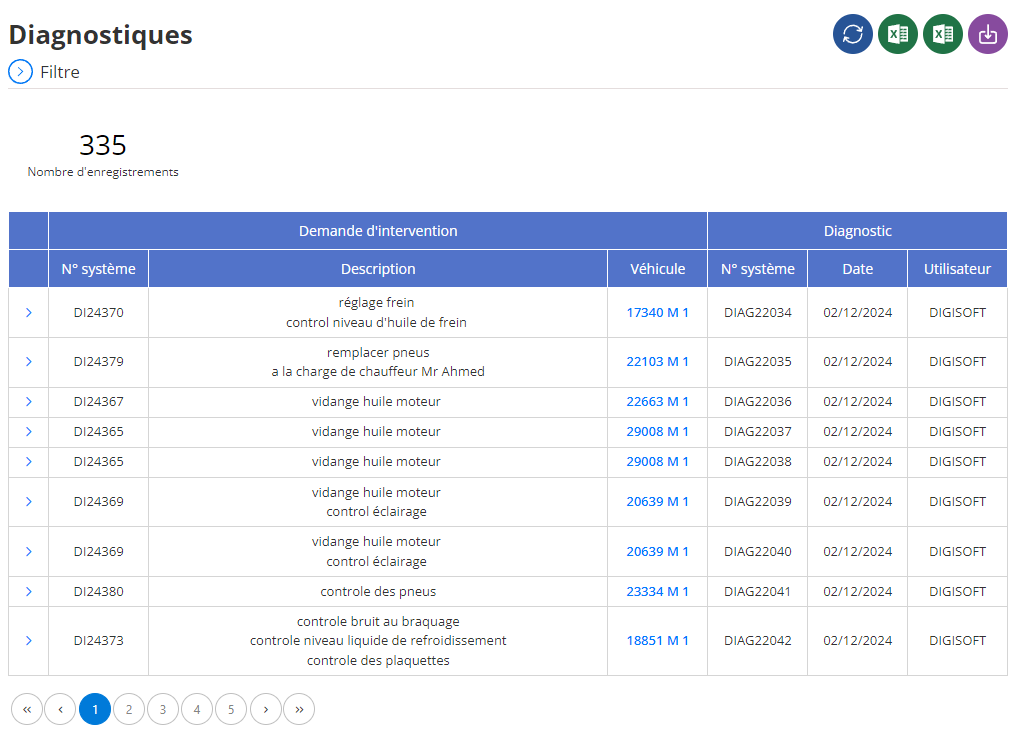
Presentation of diagnostics in table
In the user interface, the diagnostics are organized in the form of a structured table. Each row represents a specific diagnosis, while the columns display key information to facilitate analysis and management of identified issues. Here is an overview of the main fields that make up this table:
- Request for intervention:This field links the diagnosis to a specific intervention request, offering traceability between the detection of the problem and its resolution.
- System No. (Intervention request):Unique identifier assigned to each request associated with the diagnosis, making it easy to follow the different management steps.
- Description :A precise summary of the problem identified or observations made during diagnosis. This information provides an immediate understanding of the nature of the anomalies.
- Vehicle:The vehicle concerned by the diagnosis is specified here, guaranteeing targeted management of interventions and a clear vision of the technical condition of each unit.
Diagnostic Specific Data
The diagnostics themselves include additional information for detailed analysis:
- System No. (Diagnosis):Unique number associated with the diagnosis, essential to ensure rapid and reliable identification in all technical files.
- Number:Internal or external reference linked to diagnosis, reinforcing the traceability of inspection and technical evaluation processes.
- Date :The date the diagnosis was made is recorded here. This allows you to track inspection history and identify recurring needs.
- Utilisateur :The name or identifier of the person who carried out or recorded the diagnosis is indicated, guaranteeing complete traceability and accountability of those involved.
Importance of Centralized Diagnostic Management
- Failure Prevention:En identifiant les problèmes techniques à un stade précoce, cette section permet d’éviter les défaillances majeures et les immobilisations imprévues des véhicules.
- Improved Sustainability:By following diagnostics regularly, it becomes possible to extend the lifespan of vehicles through appropriate preventive maintenance.
- Operational Efficiency:A clear and structured centralization of data facilitates the rapid processing of diagnostics, reducing the time between problem detection and resolution.
- Analysis and Monitoring:Detailed information on each diagnosis allows managers to spot trends, such as common issues by model or usage, and adjust maintenance strategies accordingly.
- Traceability and Responsibility:By associating each diagnosis with a user, a vehicle and an intervention request, this section guarantees total transparency in the technical inspection management process.
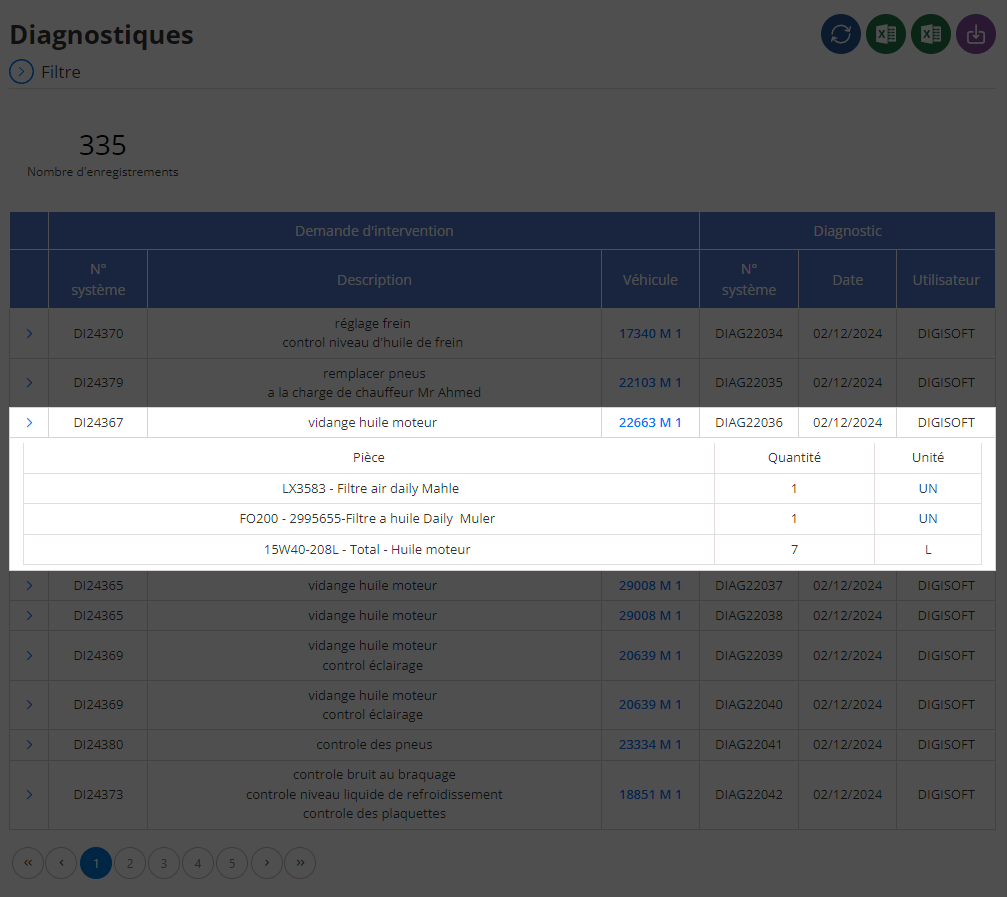
The section dedicated to diagnostics goes beyond its traditional inspection role by becoming a real strategic lever for fleet management. Thanks to an intuitive interface and exhaustive data, it helps managers anticipate needs, plan interventions and reduce costs linked to unforeseen repairs. By centralizing all relevant information, this section contributes to rapid decision-making based on concrete facts.
Diagnostic management is a cornerstone of ensuring the performance and safety of fleet vehicles. By providing a clear overview and detailed data, this section not only helps resolve technical issues efficiently, but also builds a robust preventive maintenance strategy. With this tool, it becomes possible to minimize risks, optimize costs and guarantee maximum vehicle availability on a daily basis.