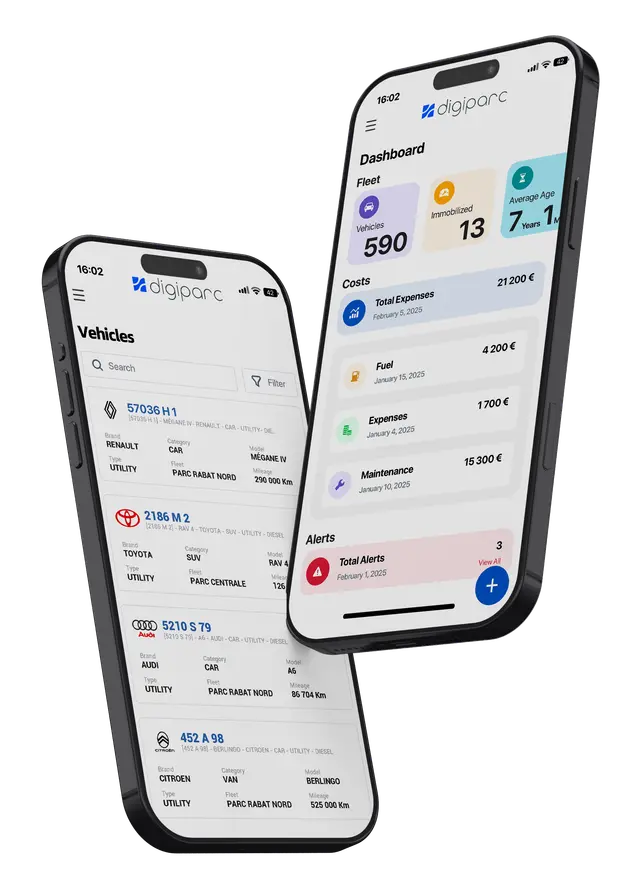
The diagnostic management process is essential to ensure preventive and reactive vehicle maintenance. An intelligent filtering system simplifies access to specific information and ensures rapid and accurate monitoring of necessary interventions. Thanks to adapted search criteria, it becomes easy to sort and consult diagnostics relating to vehicles or parts, thus ensuring effective treatment of the problems detected.
Optimized filtering for diagnostic management
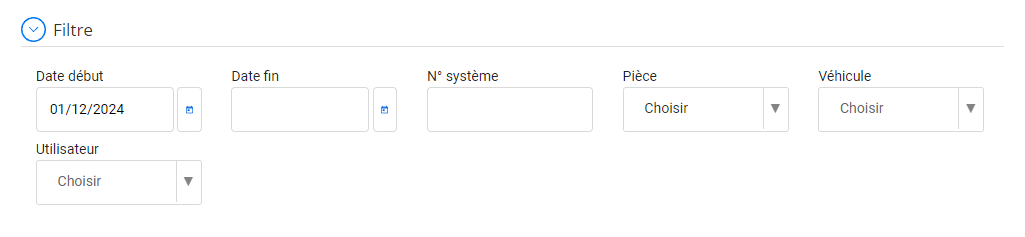
In the interface dedicated to diagnostic management, a powerful and intuitive filtering system has been developed to allow managers to monitor and analyze information related to each intervention. Here are the main criteria available, facilitating the identification and monitoring of diagnoses:
-
Start date and End date: These filters allow you to restrict the results to diagnostics carried out in a given period. This criterion is valuable for temporal analyses, making it possible to quickly identify recent or future interventions, and to ensure appropriate monitoring of vehicle maintenance.
-
System No.: This search criterion makes it possible to identify a precise diagnosis by its unique number, thus simplifying the management of histories and ensuring complete traceability of interventions. It is particularly useful for managers seeking to track the progress of a specific issue within the management system.
-
Piece: The “part” filter allows you to specify interventions or diagnostics relating to a particular part of the vehicle. This is crucial for managers wishing to track the state of wear or need for replacement of specific components, thus optimizing parts inventory management and repair planning.
-
vehicle: By filtering diagnostics by vehicle, it is possible to follow interventions on a particular vehicle, thus guaranteeing precise management of its condition. This criterion is particularly useful for companies with several vehicles, in order to track the history of each vehicle and anticipate future maintenance needs.
-
User: This filter allows you to isolate diagnostics carried out by a specific user, whether a technician, a mechanic or a manager. It is essential for evaluating staff performance and for ensuring rigorous monitoring of the interventions carried out by each member of the team.
Proactive management of diagnostics
With these filtering tools, managers can make informed decisions to optimize vehicle maintenance and reduce downtime. Diagnostic management becomes smoother and more accurate, contributing to fleet sustainability and performance. The system offers several advantages:
-
Improved responsiveness: Diagnostics can be quickly filtered and viewed, allowing rapid response to detected issues. This makes it possible to intervene in good time, thus limiting the risk of a major breakdown.
-
Optimization of maintenance costs: By accessing histories and following the evolution of diagnostics, it becomes possible to identify recurring problems and plan preventive actions before costs become too high.
-
Detailed and personalized follow-up: Managers can get a complete and detailed overview of each vehicle or part, facilitating proactive intervention management and repair planning.
-
Strengthening traceability: With adapted search criteria, each diagnosis is carefully recorded and monitored, thus guaranteeing total transparency and management in accordance with the company's internal standards.
The diagnostic filtering system goes well beyond simple intervention management. It ensures smoother and more strategic management of diagnostics, thus contributing to the overall performance of operations and the reduction of costs linked to vehicle maintenance. Thanks to a neat interface and personalized criteria, managers can monitor vehicle diagnostics in real time, make more informed decisions, and optimize the management of their fleet efficiently.