
Module · CMMS
Orders List
Orders List
The management of purchase orders constitutes a cornerstone in the monitoring of interventions and supplies linked to vehicle maintenance. This section provides a centralized and comprehensive view of purchase order data, allowing full transparency in the organization of purchasing and service delivery processes.
Each purchase order brings together essential information, such as detailed costs, the providers involved and data specific to each transaction. This structured presentation promotes a clear understanding of financial flows, while helping managers make informed decisions.
A clear and functional structure
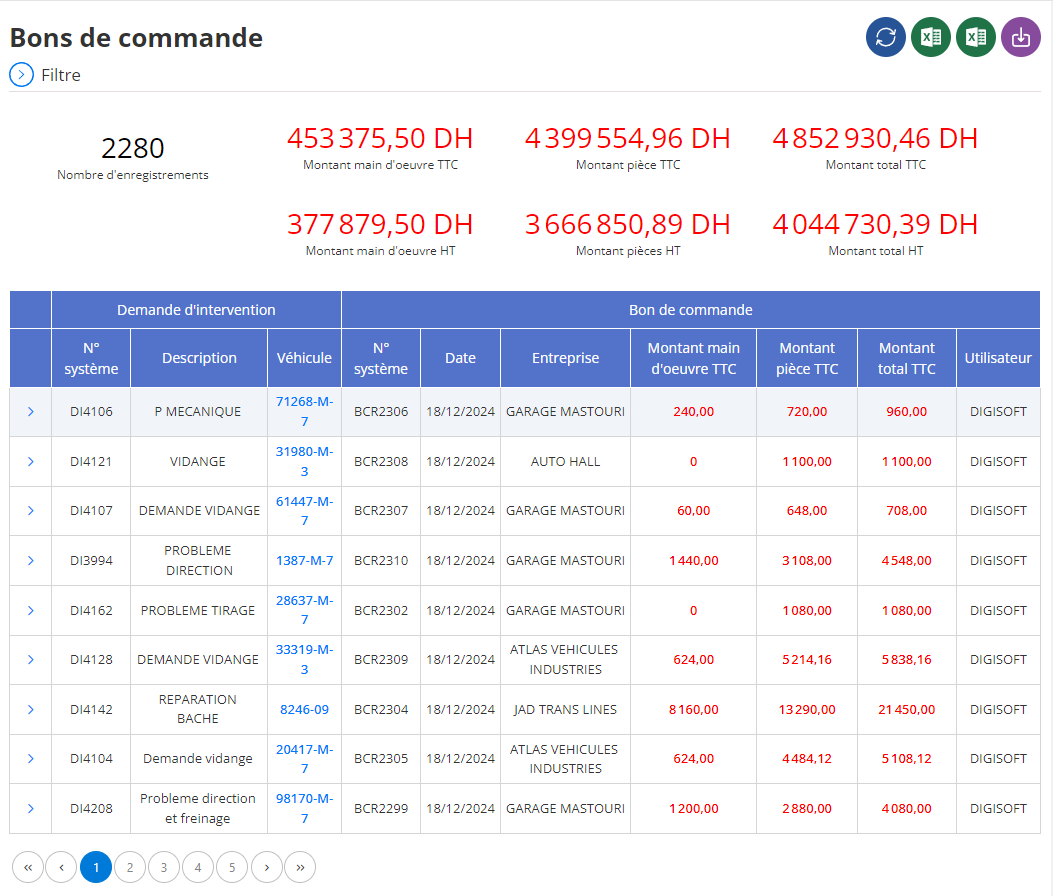
L’affichage des bons de commande a été pensé pour garantir une lisibilité optimale et une gestion efficace des données. Les utilisateurs disposent d’un tableau bien organisé où chaque ligne représente un bon de commande spécifique. Voici les informations disponibles dans cette section :
-
Demande d’intervention :Ce filtre regroupe les données liées à la demande initiale qui a conduit à l’émission du bon de commande. On y retrouve :
- N° Système :Un identifiant unique pour chaque intervention, facilitant la traçabilité et la recherche des données associées.
- Description :Une synthèse claire de l’intervention ou de la prestation demandée, permettant de comprendre rapidement son contenu et ses objectifs.
- Véhicule :La désignation du véhicule concerné par l’intervention, essentielle pour suivre l’historique des travaux effectués sur chaque unité.
-
Bon de commande :Les données relatives aux bons de commande eux-mêmes sont présentées dans un tableau détaillé :
- System No.:Main identifier allowing each purchase order to be linked to its original intervention.
- Number :A specific reference assigned to the purchase order, reinforcing its traceability in the system.
- Date :The date of issue of the purchase order, which serves as a time benchmark for organizing operations.
- Business:The name of the service provider or supplier concerned, useful for evaluating the performance of business partners and maintaining strategic collaboration.
- Labor amount including tax:Le coût des services de main-d’œuvre inclus dans le bon de commande. Cette donnée est cruciale pour suivre et contrôler les dépenses liées aux prestations humaines.
- Amount including tax:Le coût total des pièces détachées nécessaires à l’intervention, permettant d’évaluer la gestion des stocks et des approvisionnements.
- Total amount including tax:The overall order amount, combining labor and parts costs, providing an overview of financial commitments.
- User:The name or identifier of the person who issued the purchase order, guaranteeing clear responsibility and complete traceability.
The purchase order section is not only a management tool, but a real strategic lever to optimize operational performance. By offering a complete and detailed view of transactions, it allows managers to maintain rigorous control over budgets and ensure the quality of services.
Additionally, this centralized approach facilitates collaboration between different stakeholders, ensures smooth communication and strengthens the company's ability to quickly respond to maintenance and supply needs.
The integration of purchase orders into a centralized system is an essential solution for any organization seeking to combine transparency, rigor and efficiency. With a clear presentation, accessible data and assured traceability, this section helps to streamline processes, control costs and improve the management of interventions.
By centralizing all key information, purchase orders become an essential tool for planning, controlling and executing maintenance operations optimally, while supporting responsible financial management and sustainable partnerships.