Module · CMMS
Interview Management
Interview Management
Maintenance Plan Organization offers a complete solution for structuring and managing maintenance programs in a fluid and centralized manner. Designed to meet the needs of operational teams, this functionality allows maintenance plans to be defined and adjusted for each vehicle or equipment, thus ensuring rigorous monitoring adapted to specific requirements.
Each maintenance plan can be configured according to the specific needs of the company, taking into account maintenance frequencies, technical specifications and operational constraints. Users have the ability to organize and update these plans, ensuring efficient and accurate planning of necessary interventions.
By centralizing all data relating to maintenance plans, this system offers a clear and up-to-date overview. Managers can easily identify upcoming maintenance, evaluate completed tasks, or adjust priorities based on the immediate needs of the fleet or equipment.
This proactive and structured approach optimizes the performance of vehicles and equipment, reduces the risk of unplanned breakdowns and improves the lifespan of assets. By making information accessible and organized, the organization of maintenance plans becomes an essential lever for strengthening the reliability and overall efficiency of maintenance operations.
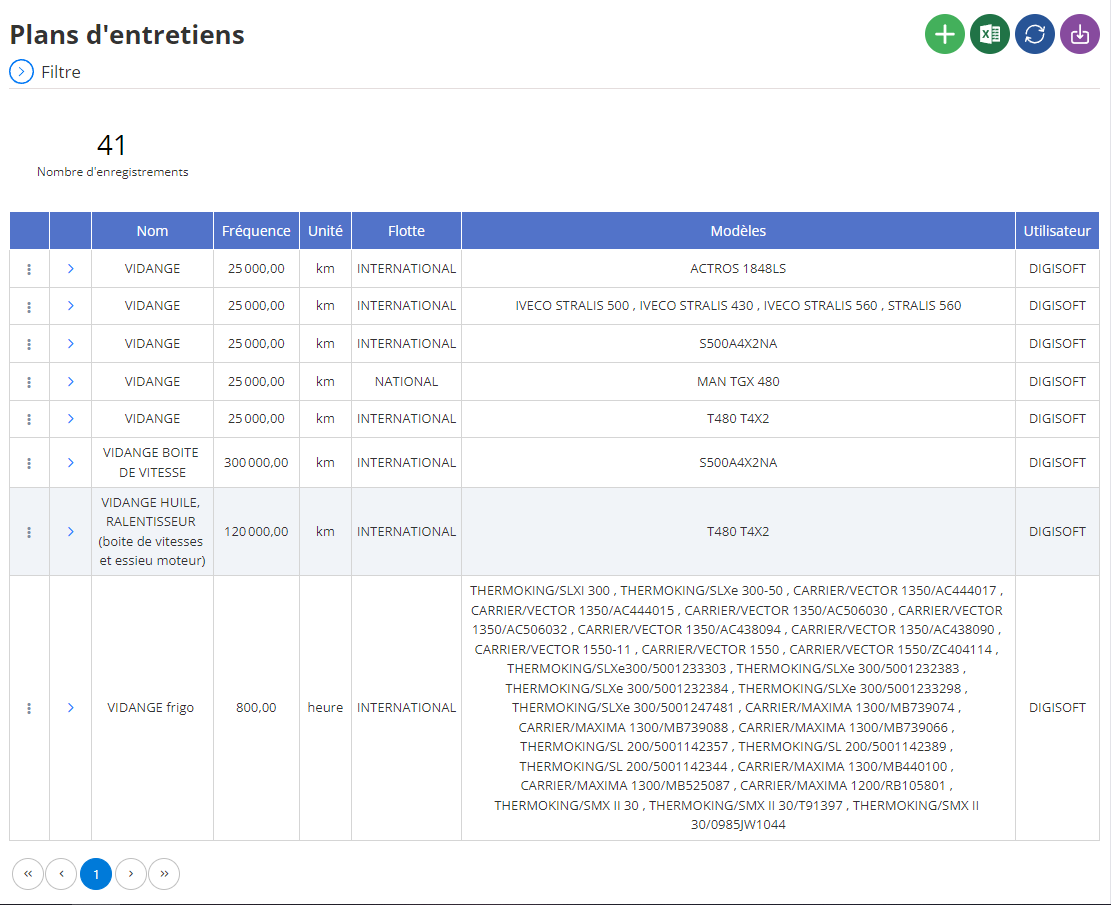
Adding a new maintenance plan
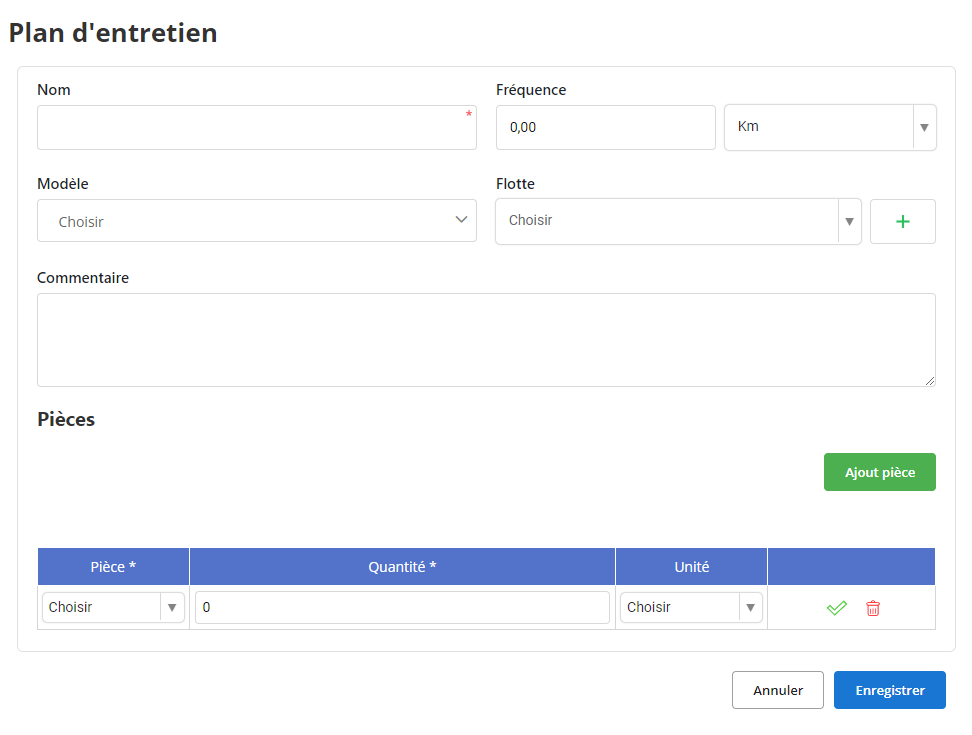
This interface is designed to allow the detailed and precise creation of a maintenance plan. The objective is to structure regular maintenance operations in order to ensure the durability and optimal performance of fleet vehicles.
Here are the main fields to fill in to develop a new maintenance plan:
-
Maintenance plan name: This field is used to give a descriptive title to the plan. For example, you could indicate "Light Quarterly Maintenance" or "Comprehensive Annual Service." This makes it easier to quickly identify each plan in the database.
-
Frequency: Define the frequency of maintenance, either in kilometers traveled or in a predetermined unit of time. This information is crucial to ensure that maintenance is carried out within appropriate timeframes, thereby avoiding premature wear and tear on vehicles.
-
Model: Select the vehicle model concerned by the maintenance plan. This makes it possible to adapt maintenance procedures to the technical specificities of the different types of vehicles used.
-
Fleet: This field allows you to associate the maintenance plan with a specific fleet, offering centralized and consistent management of the different groups of vehicles. You can add a new fleet to the base by clicking on the “+” button.
-
Commentaire: A section dedicated to additional notes or instructions, such as specific recommendations for the technical team, special precautions to take, or observations based on previous interviews.
-
Parts needed: In this section, you can add the parts planned for maintenance, as well as their quantity and unit. This functionality ensures that all necessary components are identified and available before the intervention begins.
By using this interface, managers can not only record the details of maintenance plans but also effectively structure future interventions. This ensures proactive maintenance of vehicles, reduces the risk of unplanned breakdowns, and extends their lifespan.
Modifying a maintenance plan
To update maintenance plan information, first navigate to the Maintenance Plans section in the system. Use the search tools to locate the plan you want to modify, filtering by name, vehicle model, fleet, or any other relevant criteria. Once the plan is identified, select the “Edit” option to open the update interface.
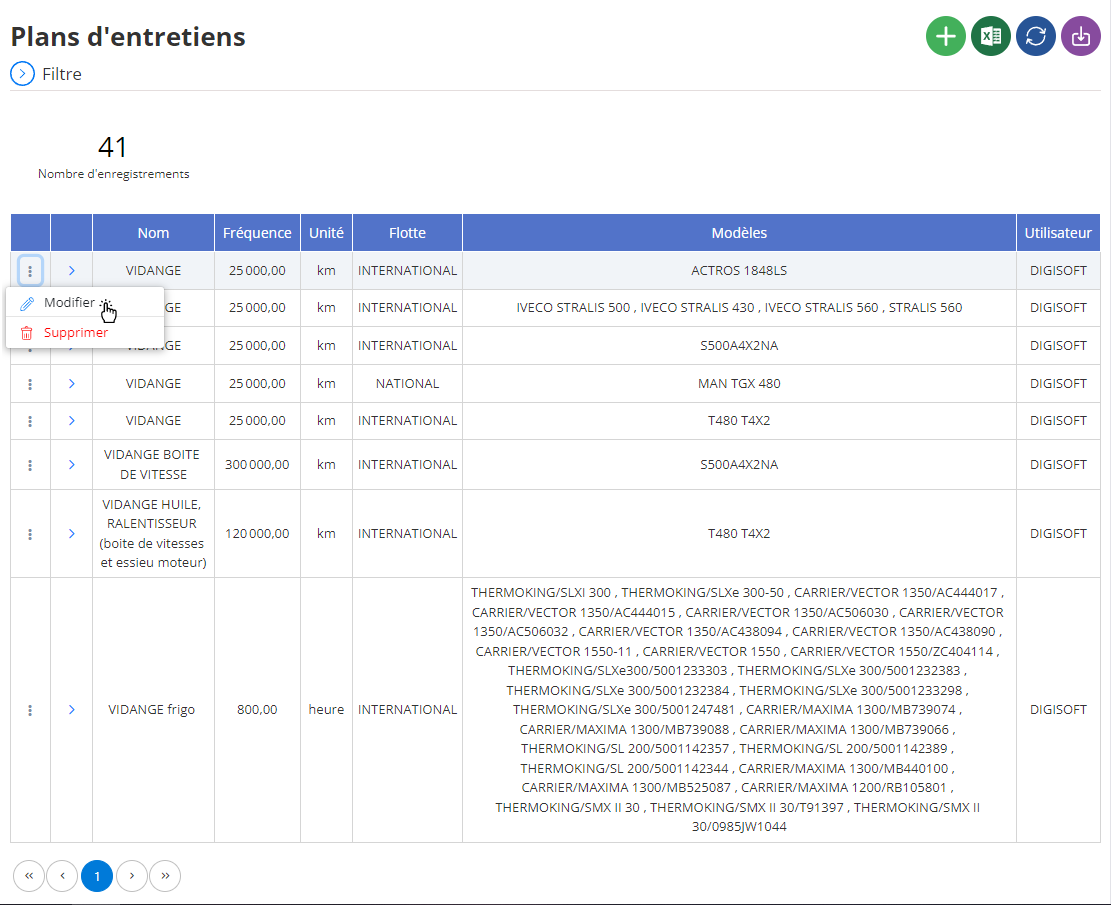
In this interface, you will be able to modify several important parameters of the maintenance plan. These changes may include:
- Maintenance plan name: You can adjust or rename the plan to better reflect its content or purpose.
- Maintenance frequency: Modify the frequency according to new needs, whether expressed in kilometers or in duration.
- Model and fleet: Adapt the maintenance plan to another model or associate it with a different fleet if necessary. This can be useful for optimizing operations management.
- Parts List: Add, modify or remove parts required for maintenance, adjusting quantities and units to reflect actual needs.
- Comments: Enrich or update comments related to the plan, such as specific observations or feedback from previous interviews.
The accuracy of the information entered is essential to guarantee the proper execution of interviews and ensure reliable follow-up. A well-structured maintenance plan helps optimize vehicle maintenance, reduce the risk of unforeseen malfunctions, and extend the life of the fleet.
Once all changes have been made, click "Save" to validate the updates. This step is crucial for maintaining an accurate history of adjustments made to maintenance plans. It also makes it possible to maintain traceability of developments, thus facilitating the evaluation of the effectiveness of maintenance strategies in the long term. With up-to-date, well-documented plans, managers can improve planning, anticipate maintenance needs, and ensure optimal fleet operation.
Deleting a maintenance plan
To delete a maintenance plan from the system, first navigate to the list of existing maintenance plans. Use the available search tools to quickly identify the plan in question, filtering by name, vehicle model, fleet, or any other relevant criteria. Once the plan is located, select it and click on the “Delete” option to start the deletion process.
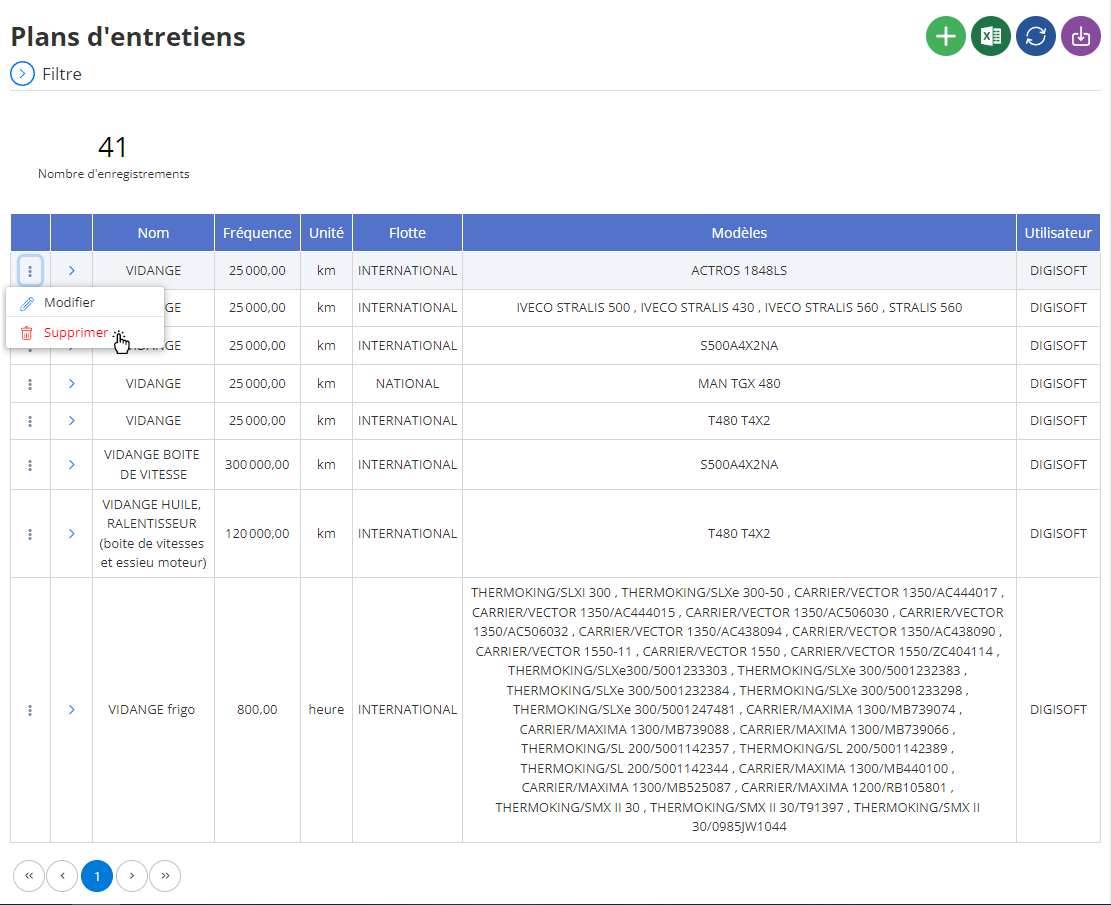
Before proceeding, a confirmation window will be displayed to validate this action. It is important to note that the deletion of a maintenance plan is permanent and irreversible. This means that all information associated with this plan, such as maintenance frequencies, parts lists, or comments, will be permanently deleted. Therefore, it is essential to ensure that this operation is intentional and that no essential data will be lost.
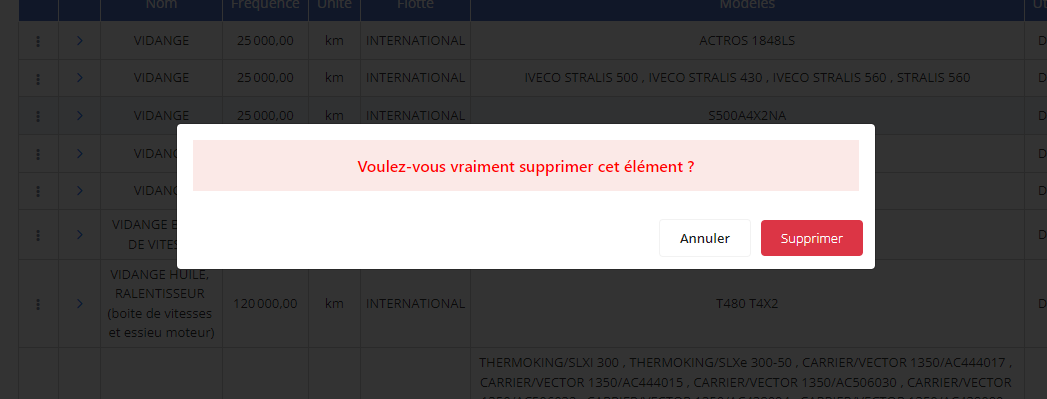
Deleting a maintenance plan should be done with caution, particularly if the information it contains may still be useful for future fleet management. Before initiating this action, it is recommended to evaluate whether the plan can be archived instead of deleted. Such an approach allows us to retain valuable information that could prove useful for retrospective analyzes or long-term strategic adjustments.
By ensuring that only truly obsolete or unnecessary maintenance plans are deleted, you help maintain a clear and relevant database. This rigor guarantees more efficient management of resources and optimal monitoring of maintenance needs.