
Module · CMMS
Liste Entretiens
Liste Entretiens
La gestion des interventions représente un pilier stratégique dans le maintien des opérations et la gestion des ressources d’une entreprise. Pour assurer une organisation sans faille et une analyse détaillée, cette section propose une interface claire et intuitive. Elle offre aux utilisateurs un accès centralisé aux données clés, permettant une prise de décision rapide et une optimisation continue des processus.
Chaque intervention est documentée avec précision, dans le but de garantir une traçabilité totale, de limiter les erreurs et de favoriser une meilleure collaboration entre les différentes parties prenantes.
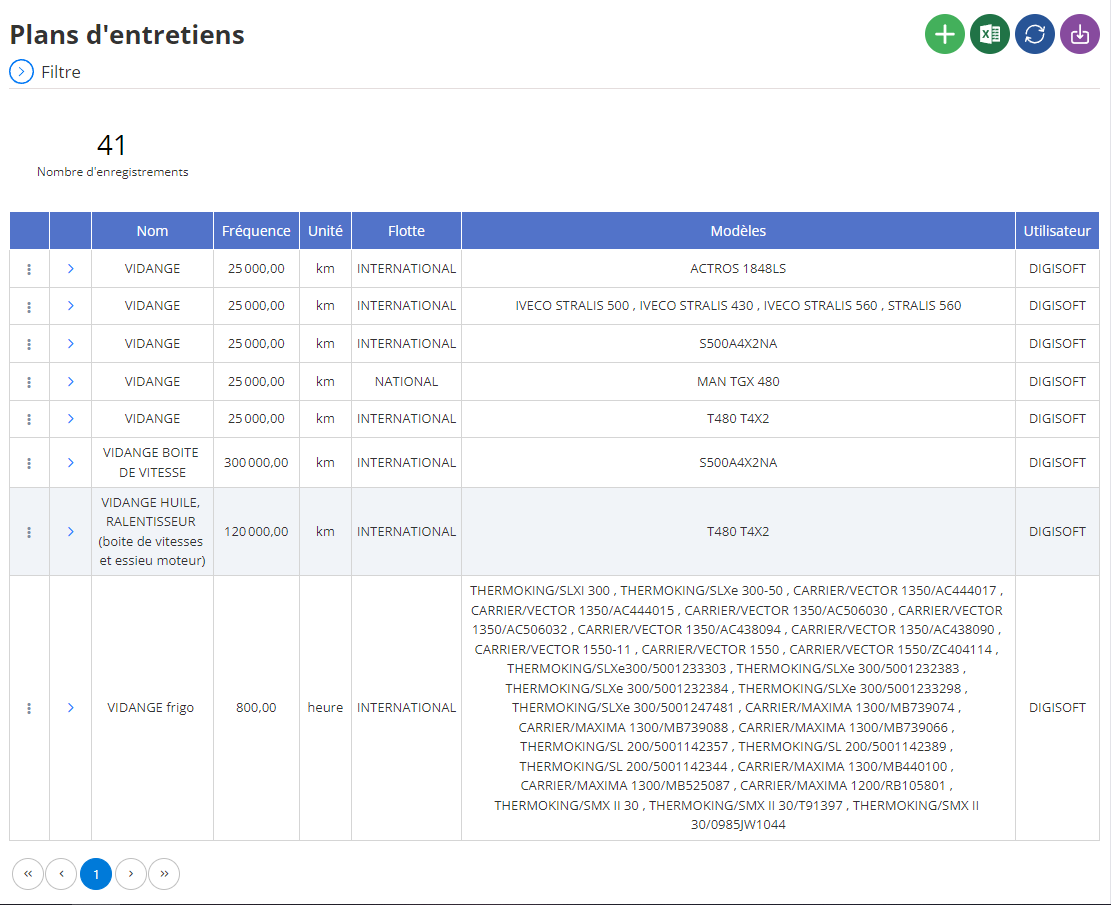
Organisation des Informations : Une Vue Détaillée des Interventions
L’affichage des interventions repose sur une structure bien pensée, divisée en catégories claires, permettant un suivi exhaustif et précis des activités.
Détails Généraux des Interventions
Cette section rassemble toutes les informations essentielles nécessaires à la compréhension et au suivi des interventions effectuées. Elle inclut :
- Nom :Une désignation explicite et identifiable de l’intervention, facilitant la gestion et le tri des opérations.
- Fréquence :Indicateur de la périodicité ou de la récurrence de l’intervention, permettant d’anticiper et de planifier efficacement les besoins.
- Unité :L’unité spécifique ou l’équipement concerné par l’intervention, essentiel pour suivre l’historique d’entretien et garantir une maintenance optimale.
- Flotte :L’identification de la flotte ou du groupe auquel appartient l’unité, permettant une gestion centralisée et structurée des ressources.
- Modèles :Les modèles spécifiques des équipements ou véhicules concernés par l’intervention, utiles pour prévoir les besoins en pièces détachées et services spécialisés.
- Utilisateur :Le nom ou l’identifiant de l’opérateur ayant planifié ou validé l’intervention, garantissant la traçabilité et la responsabilisation au sein du système.
L’intégration des informations clés dans une plateforme centralisée transforme la gestion des interventions en un outil stratégique. En offrant une vue d’ensemble claire et accessible, elle permet aux responsables de suivre l’état des opérations en temps réel, de prévenir les problèmes avant qu’ils ne surviennent, et d’aligner les activités avec les objectifs de l’entreprise.
Cette approche centralisée facilite également la collaboration entre les équipes, réduit les risques d’erreurs et garantit une cohérence dans l’exécution des tâches. Elle contribue à créer un environnement de travail harmonieux et orienté vers les résultats.