Module · Reporting
Fuel consumption
Fuel consumption
The reportRC001 - Fuel consumptionallows you to track the fuel consumption of fleet vehicles. It provides detailed information on each fuel transaction, including quantities consumed, associated costs and refueling stations. This tool is essential for optimizing fuel management and controlling costs linked to vehicle fleet operation.
Explanation of table columns
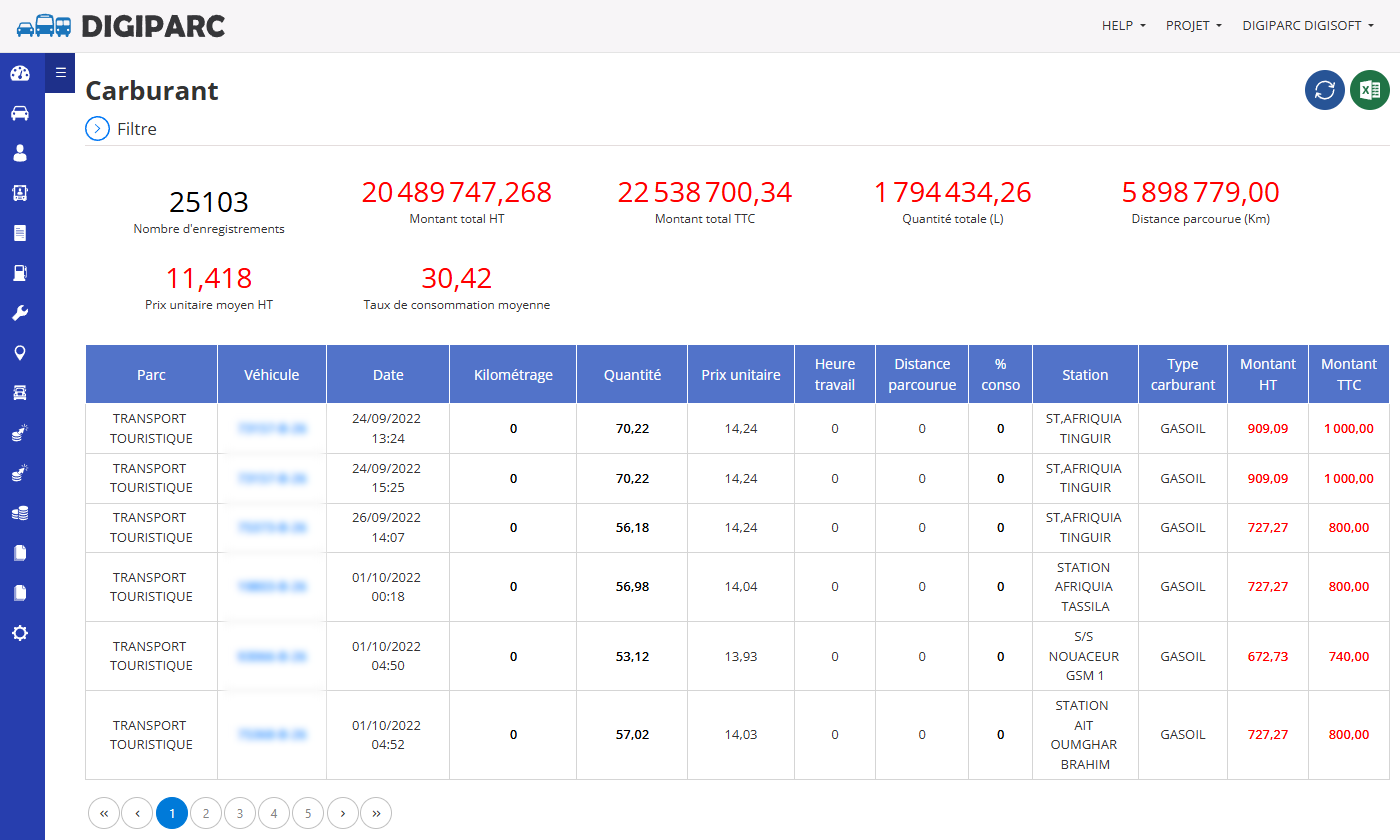
The report is organized as a table displaying several columns, each representing a key piece of data:
-
Park
- Designates the fleet to which the vehicle belongs (example: Tourist Transport, Logistics Transport, etc.).
- Allows you to classify vehicles according to their use.
-
vehicle
- Identifier of the vehicle that carried out the fuel transaction.
- Allows you to monitor the individual consumption of each vehicle.
-
Date
- Date and time of the refueling operation.
- Allows you to analyze the frequency of refills and detect possible anomalies.
-
Mileage
- Distance traveled by the vehicle at the time of refueling.
- Allows you to evaluate the efficiency of the fuel consumed.
-
Quantity
- Volume of fuel purchased in liters.
- Allows you to track the amount of fuel consumed by each vehicle.
-
Unit price
- Cost per liter of fuel at time of purchase.
- Allows you to evaluate the evolution of fuel prices.
-
Working hours
- Indicates the number of hours the vehicle was used before refueling.
- Useful for analyzing consumption based on time of use.
-
Distance traveled
- Distance (in kilometers) traveled since the last refueling.
- Essential for calculating the vehicle's mileage.
-
% consumption
- Percentage of fuel consumption in relation to the distance traveled.
- Allows detection of possible overconsumption or abnormal deviations.
-
Station
- Name of the gas station where the refueling was carried out.
- Allows you to track fuel purchase locations and check transaction consistency.
- Fuel type
- Type of fuel used (example: Diesel, Gasoline, etc.).
- Helps ensure each vehicle uses the correct fuel.
- Amount excluding tax
- Total amount of purchase excluding taxes.
- Allows you to analyze net fuel costs.
- Amount including tax
- Total amount of purchase including taxes.
- Represents the actual cost paid for fuel.
Added value of the report
TEAreport RC001 - Fuel consumptionoffers several advantages for vehicle fleet management:
- Suivi détaillé des consommations: Allows you to monitor the fuel consumption of each vehicle and identify possible anomalies (overconsumption, fraud, etc.).
- Cost optimization: By identifying the vehicles that consume the most fuel, the company can implement strategies to reduce expenses (eco-driving training, maintenance, etc.).
- Effective management of gas stations: Allows you to evaluate the distribution of purchases between the different service stations and to optimize contracts with fuel suppliers.
- Gap detection: Thanks to consumption and distance traveled indicators, it is possible to identify inconsistencies in fuel transactions and prevent fraud.
Conclusion
TEAreport RC001 - Fuel consumptionis an essential tool for efficient fuel management. It makes it possible to optimize expenses, precisely monitor vehicle consumption and identify improvement opportunities for more economical and ecological operation of the vehicle fleet.