
Module · Reporting
Fuel Vehicle
Fuel Vehicle
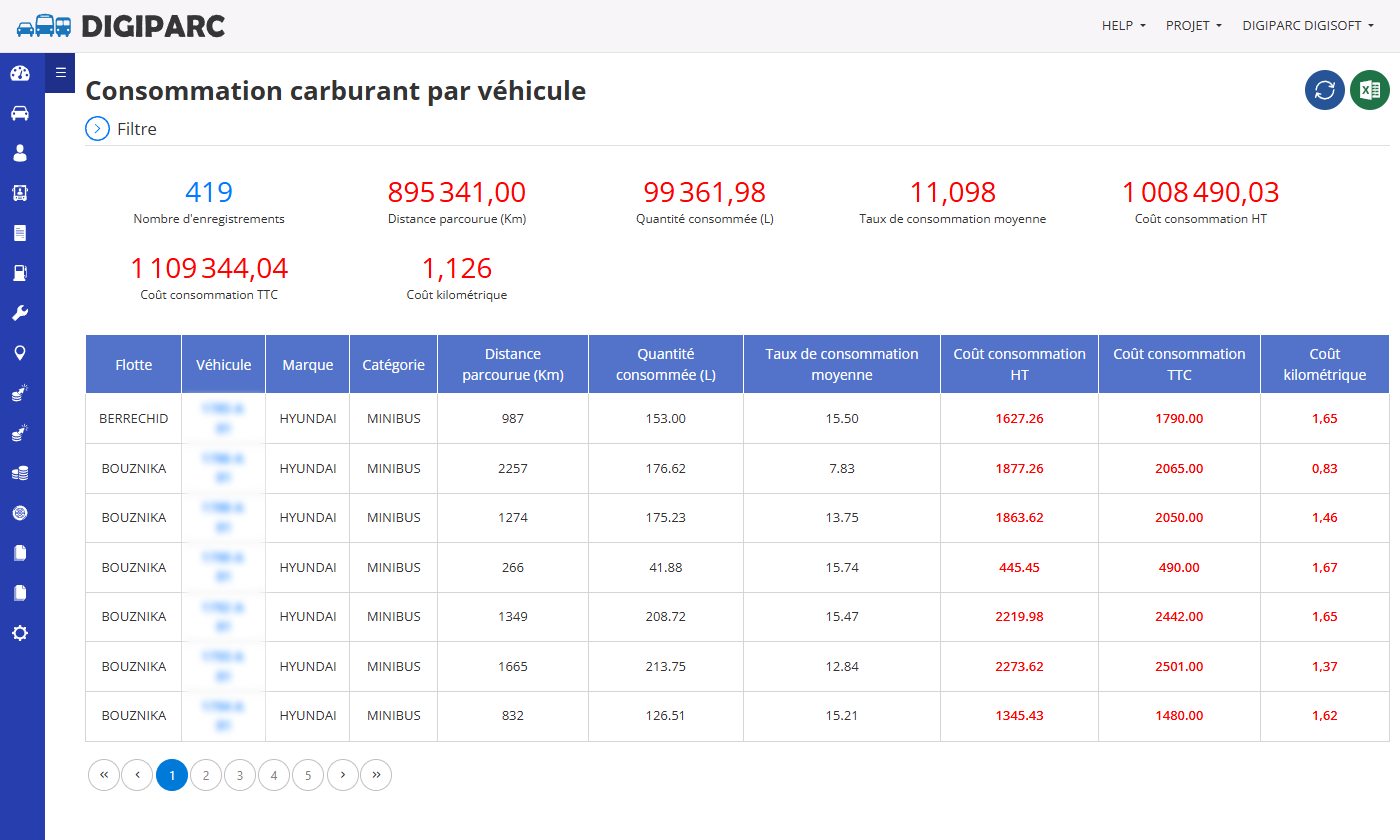
The reportRC011 - Fuel consumption per vehicleallows you to analyze the fuel consumption of each vehicle in the fleet. It provides a detailed view of the quantity of fuel used, the distance traveled and the associated cost, making it easier to optimize fuel management and control costs.
Explanation of table columns
-
Fleet
- Designates the fleet to which the vehicle belongs (example: BERRECHID, BOUZNIKA).
- Allows fuel consumption to be segmented by entity or group of vehicles.
-
vehicle
- Identifies the vehicle affected by the fuel consumption.
- Allows you to analyze the consumption of each vehicle individually.
-
Brand
- Vehicle brand (example: HYUNDAI).
- Useful for comparing consumption between different vehicle brands.
-
Category
- Vehicle category (example: MINIBUS).
- Allows you to evaluate consumption based on the type of vehicle.
-
Distance traveled (Km)
- Total number of kilometers traveled by the vehicle during the analysis period.
- Useful for establishing a link between fuel consumption and vehicle use.
-
Quantity consumed (L)
- Total volume of fuel consumed in liters.
- Allows you to evaluate fuel needs and optimize inventory management.
-
Average consumption rate
- Average fuel consumption expressed in liters per 100 km traveled.
- Key indicator for comparing the energy efficiency of vehicles.
-
Consumption cost excluding tax
- Total amount spent on fuel excluding taxes.
- Useful for tracking net fuel consumption costs.
-
Consumption cost including tax
- Total amount spent on fuel, including VAT.
- Represents the actual cost paid for fuel consumed.
-
Mileage cost
- Fuel cost per kilometer traveled.
- Important indicator for evaluating the economic efficiency of vehicles and optimizing operating costs.
Added value of the report
TEAreport RC011 - Fuel consumption per vehicleoffers several advantages for cost management and fleet optimization:
- Detailed analysis of consumption: Allows you to precisely monitor fuel use per vehicle and identify possible excess consumption.
- Cost optimization: Helps to better control fuel costs and identify the most economical vehicles.
- Vehicle Efficiency Assessment: Allows you to compare the performance of vehicles according to their consumption and their mileage cost.
- Help with decision making: Provides essential data to adjust fuel management policies and improve fleet efficiency.
Conclusion
TEAreport RC011 - Fuel consumption per vehicleis an essential tool for optimal fuel management. It makes it possible to monitor consumption, optimize costs and compare vehicle performance in order to improve the overall efficiency of the fleet.