Module · Reporting
Maintenance log
Maintenance log
Introduction
The reportRM006 - Preventive maintenance logallows you to monitor and plan preventive maintenance operations for vehicles based on their mileage. It helps to anticipate the necessary interventions in order to guarantee the availability and reliability of vehicles.
Explanation of columns
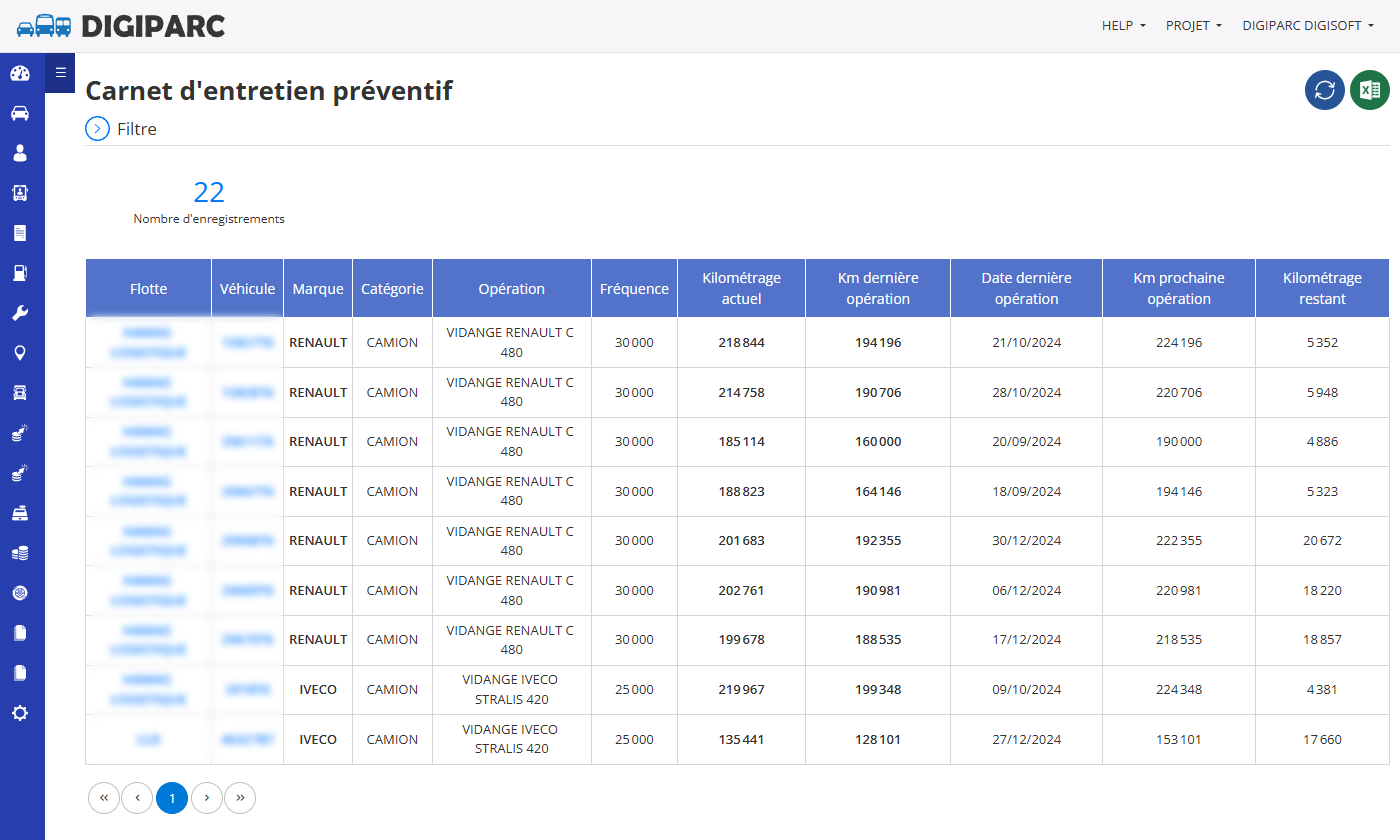
Fleet
- Identifies the fleet to which the vehicle belongs.
- Allows you to analyze vehicle maintenance by group.
vehicle
- Indicates the vehicle concerned by preventive maintenance.
- Facilitates the monitoring of interventions specific to each vehicle.
Brand
- Displays the vehicle brand (e.g. RENAULT, IVECO, etc.).
- Allows you to evaluate maintenance based on manufacturers.
Category
- Specifies the type of vehicle (e.g. truck, bus, car, etc.).
- Useful for analyzing maintenance by vehicle category.
Operation
- Indicates the type of maintenance carried out (e.g. oil change, overhaul, etc.).
- Allows you to follow the interventions carried out on each vehicle.
Frequency
- Defines the mileage interval between two interventions of the same type (e.g. oil change every 30,000 km).
- Used to schedule future interviews.
Current mileage
- Displays the current mileage of the vehicle.
- Allows you to assess the proximity of the next intervention.
Km last operation
- Indicates the vehicle mileage during the last preventive intervention.
- Allows you to check the regularity of maintenance.
Last operation date
- Mentions the date on which the last preventive intervention was carried out.
- Useful for analyzing maintenance frequency in relation to mileage.
Km next operation
- Indicates the mileage at which the next intervention must be carried out.
- Helps anticipate maintenance deadlines.
Mileage remaining
- Calculates the number of kilometers remaining before the next intervention.
- Allows fleet managers to be alerted to interventions to be planned.
Added value of the report
TEAreport RM006 - Preventive maintenance logbrings several advantages in maintenance management:
- Proactive planning: Allows you to anticipate maintenance and avoid breakdowns.
- Cost optimization: Reduces costly corrective interventions through well-managed preventive maintenance.
- Improved vehicle availability: Reduces the risk of prolonged immobilization of vehicles.
- Structured monitoring: Provides clear visibility on the status of interviews and upcoming deadlines.
Conclusion
TEAreport RM006 - Preventive maintenance logis a key tool to ensure the proper functioning of vehicles while respecting a preventive maintenance program. It helps optimize vehicle lifespan, reduce unforeseen repair costs and ensure better resource management.