Module · Reporting
Stock Status
Stock Status
Description of the report
The report“Stock Status”provides a detailed view of the item stocks available in the organization's different stores. It tracks the quantity delivered, transferred, returned and used of items, as well as their estimated monetary value. This report is crucial to ensure effective inventory management and avoid shortages or overstocks.
Detailed explanation of columns
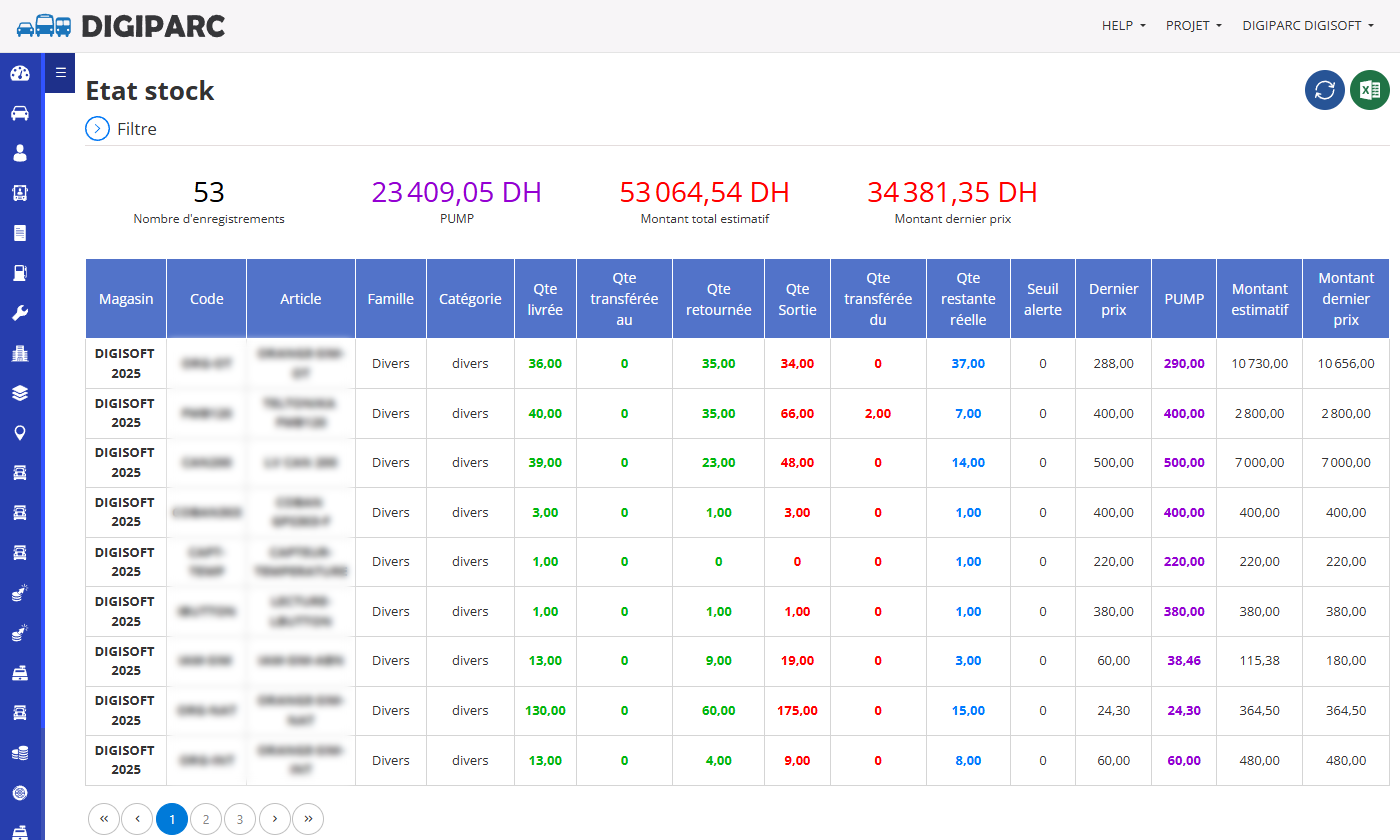
- Store: Name of the store where the item is stored.
- Code: Référence unique attribuée à chaque article pour l'identifier.
- Article: Désignation ou nom de l'article.
- Famille: Classification de l'article selon sa nature ou son usage.
- Catégorie: Sous-classification de l'article au sein de sa famille.
- Qte livrée: Quantité totale de l'article reçue en stock.
- Qte transférée au: Quantity of the item transferred to another store.
- Qty returned: Quantity returned to stock after use or non-compliance.
- Qty output: Total quantity of items consumed or used.
- Qty transferred from: Quantity of item received from another store.
- Current remaining quantity: Actual quantity of the item still available in stock.
- Alert threshold: Minimum stock level defined to trigger a replenishment alert.
- Latest price: Last unit price recorded for this item.
- PUMP (Weighted Average Unit Price): Weighted average price based on different stock entries.
- Estimated amount: Valeur totale de l'article en stock selon le PUMP.
- Last price amount: Total value of the item in stock based on the last recorded price.
Added value of the report
- Optimization of inventory management: Allows you to monitor the evolution of stocks in real time and anticipate replenishment needs.
- Cost control: Offers visibility on inventory valuation for better control of budgets.
- Tracking item movements: Allows you to identify the quantities delivered, transferred and used in order to better understand stock rotation.
- Réduction des risques de rupture ou de surstock: Grâce aux indicateurs de quantités disponibles et de seuils d'alerte, il est possible d’assurer un stock optimal.