Module · Reporting
Mouvement Citerne
Mouvement Citerne
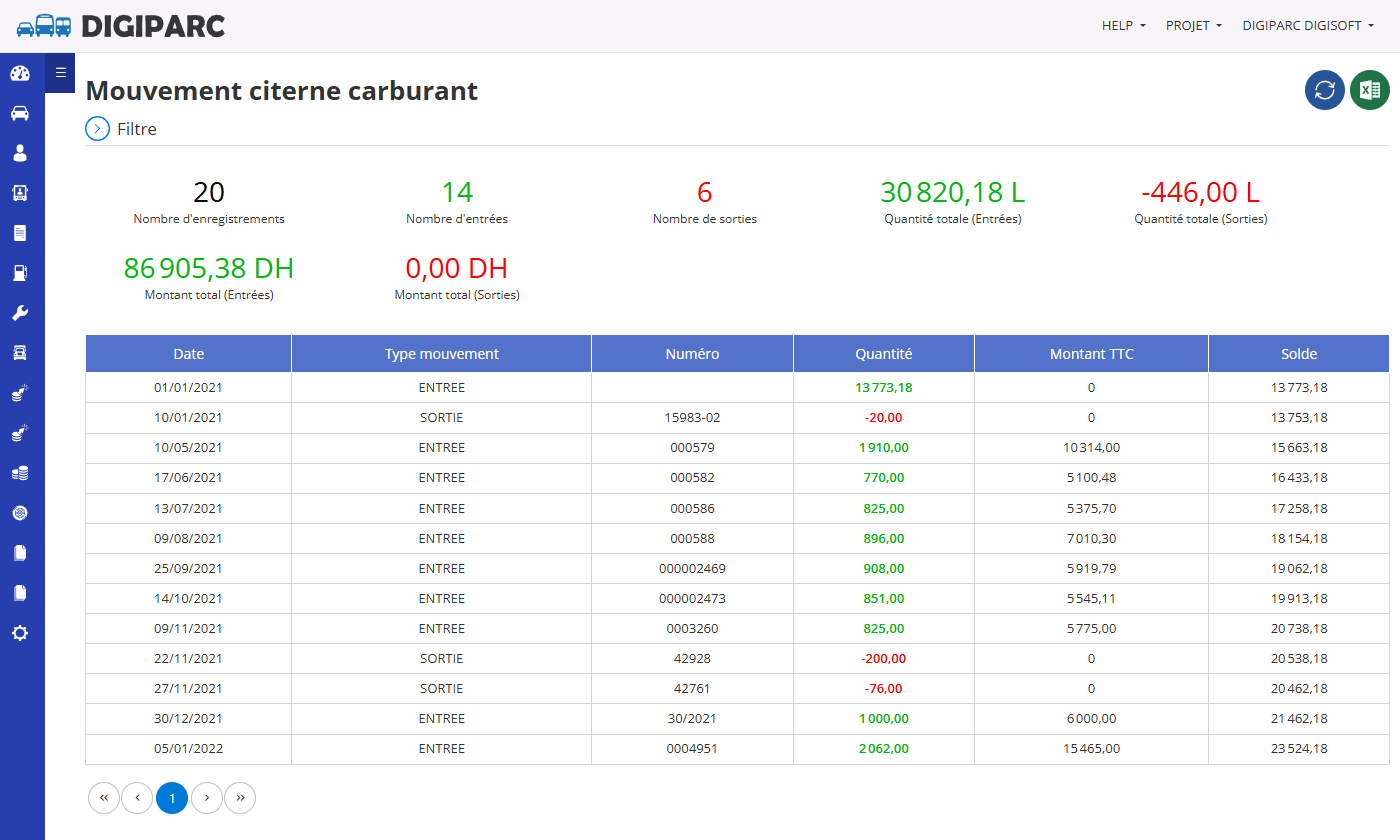
Le rapportRC012 - Mouvement citerne carburantpermet de suivre l’ensemble des entrées et sorties de carburant dans les citernes. Il donne une visibilité sur les quantités ajoutées ou retirées, ainsi que sur leur impact financier, afin d’assurer une gestion efficace du stock de carburant.
Explication des colonnes du tableau
-
Date
- Indique la date à laquelle le mouvement de carburant a été enregistré.
- Permet de suivre l’évolution des flux de carburant dans le temps.
-
Type mouvement
- Spécifie si le mouvement est uneentrée(ajout de carburant) ou unesortie(retrait de carburant).
- Facilite l’analyse des flux pour détecter les anomalies et optimiser la gestion du stock.
-
Numéro
- Référence unique du mouvement de carburant.
- Utile pour tracer chaque opération et assurer un suivi précis.
-
Quantité
- Volume de carburant (en litres) ajouté ou retiré de la citerne.
- Une quantité positive représente une entrée, tandis qu’une quantité négative indique une sortie.
-
Montant TTC
- Valeur financière du mouvement de carburant, taxes comprises.
- Permet d’évaluer l’impact des opérations sur le budget carburant.
-
Solde
- Quantité de carburant disponible dans la citerne après le mouvement enregistré.
- Aide à contrôler le niveau de stock et à éviter les ruptures ou les excédents.
Valeur ajoutée du rapport
Lerapport RC012 - Mouvement citerne carburantapporte plusieurs avantages pour la gestion du carburant :
- Suivi précis des entrées et sorties: Permet d’identifier facilement les variations de stock et d’assurer une gestion rigoureuse.
- Contrôle des coûts: Aide à surveiller les dépenses en carburant et à optimiser l’approvisionnement.
- Détection des anomalies: Permet d’identifier les écarts ou incohérences dans les quantités consommées.
- Meilleure planification: Aide à anticiper les besoins en carburant et à garantir un approvisionnement continu.
Conclusion
Lerapport RC012 - Mouvement citerne carburantest un outil clé pour assurer une gestion efficace du stock de carburant. Il permet d’analyser les entrées et sorties, de contrôler les coûts et d’optimiser la consommation, garantissant ainsi une meilleure maîtrise des ressources.