
Module · Reporting
Gestion Formations
Gestion Formations
Le rapportRP004 - Formationspermet de suivre les sessions de formation des collaborateurs. Il recense les types de formations suivies, les centres de formation impliqués, ainsi que la période et l’évaluation des formations. Ce rapport est un outil clé pour la gestion des compétences et le développement professionnel des employés.
Explication des colonnes
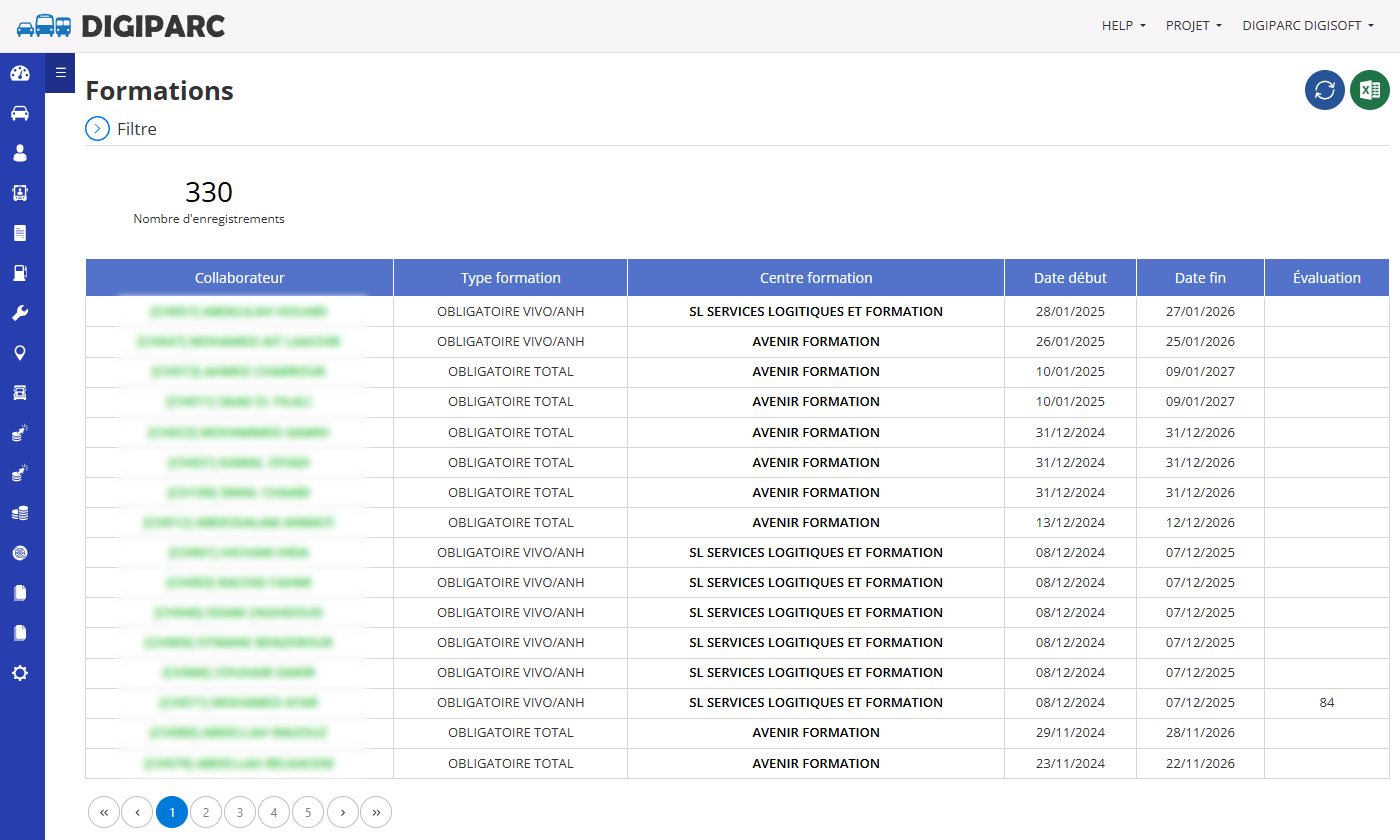
Le rapport est structuré sous forme de tableau contenant plusieurs colonnes, chacune ayant un rôle précis :
Collaborateur
- Cette colonne affiche le nom du collaborateur ayant suivi une formation.
- Elle permet d’identifier rapidement les employés ayant bénéficié d’une formation.
Type formation
- Indique la nature de la formation suivie (exemple : obligatoire, spécifique à une certification, etc.).
- Cette classification permet de différencier les formations imposées par l’entreprise des formations facultatives.
Centre formation
- Spécifie le nom du centre de formation ayant dispensé la formation.
- Cette information est utile pour l’évaluation de la qualité des formations en fonction des prestataires.
Date début
- Indique la date à laquelle la formation a commencé.
- Permet d’analyser les périodes de formation et d’anticiper les besoins futurs en montée en compétences.
Date fin
- Spécifie la date à laquelle la formation s’est terminée.
- Aide à identifier les sessions de formation en cours et celles déjà finalisées.
Évaluation
- Cette colonne contient la note ou l’évaluation obtenue par le collaborateur à l’issue de la formation.
- Permet de mesurer l’efficacité des formations et le niveau d’acquisition des compétences.
Valeur ajoutée du rapport
Lerapport RP004 - Formationsoffre plusieurs bénéfices pour la gestion des ressources humaines et du développement des compétences :
- Suivi centralisé des formations: Permet d’avoir une vision globale des formations suivies par les collaborateurs et d’assurer le respect des exigences réglementaires et internes.
- Amélioration de la gestion des compétences: Aide à planifier les formations nécessaires pour le développement des collaborateurs et l’évolution de leurs compétences.
- Évaluation de l’impact des formations: Grâce à la colonneÉvaluation, il est possible de mesurer l’efficacité des formations et d’adapter les programmes en conséquence.
- Optimisation de la planification: En connaissant les périodes de formation, les responsables peuvent organiser le travail de manière à éviter des absences simultanées.
Conclusion
Lerapport RP004 - Formationsest un outil stratégique pour la gestion et l’amélioration continue des compétences des collaborateurs. Il permet de garantir la conformité aux exigences de formation, d’optimiser les ressources et de suivre la progression des employés dans leur parcours professionnel.