Module · Reporting
Carburant Carte
Carburant Carte
Le rapport"Consommation carburant par carte"permet de suivre et d’analyser les transactions de carburant effectuées à l’aide des cartes attribuées aux véhicules d’une flotte. Il offre une vue détaillée sur la quantité de carburant consommée, les stations utilisées, ainsi que les montants engagés. Ce rapport est essentiel pour le contrôle des dépenses, la détection d’anomalies et l’optimisation de la gestion du carburant.
Explication des colonnes
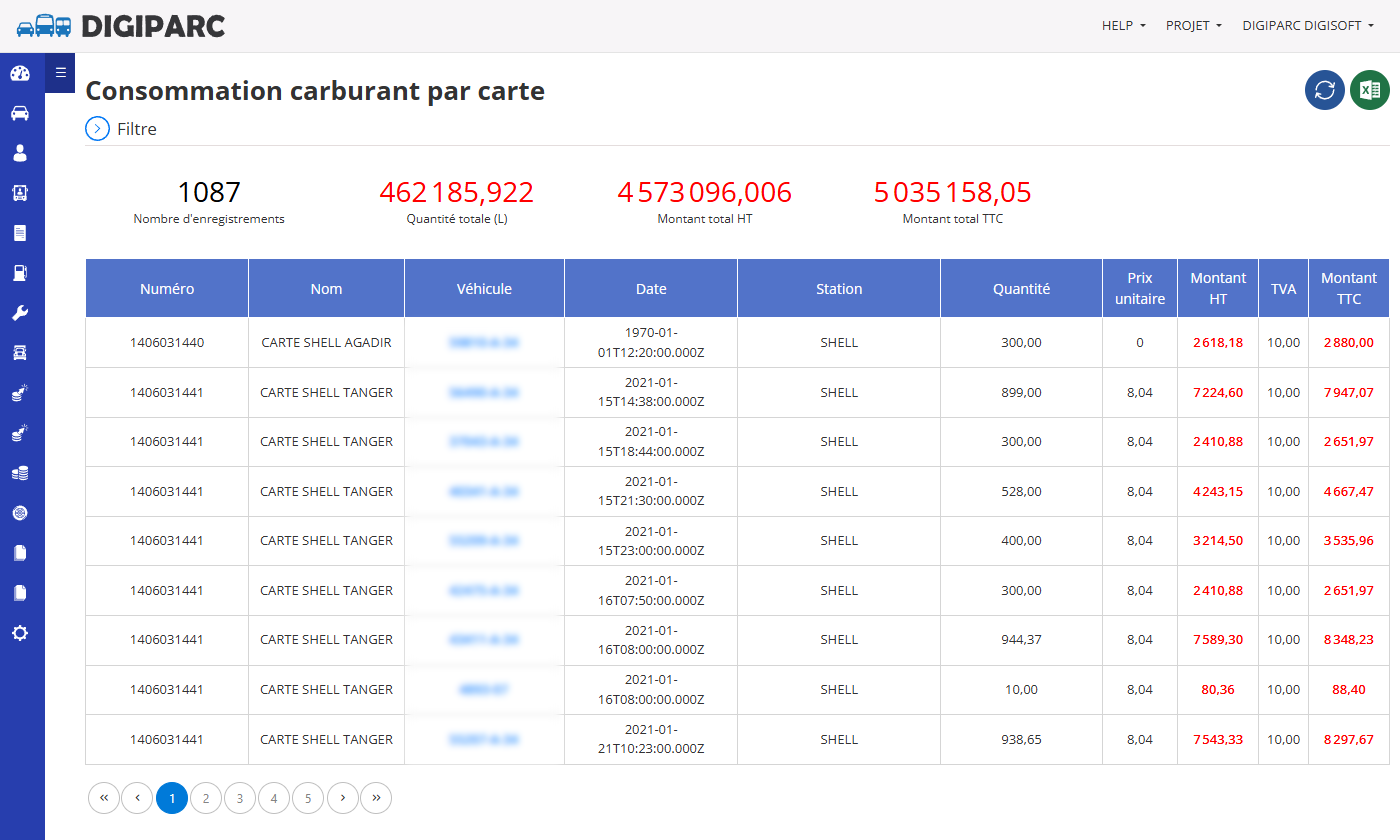
- Numéro: Identifiant unique de la carte carburant utilisée lors de la transaction.
- Nom: Nom associé à la carte carburant (exemple : fournisseur ou site d’affectation).
- Véhicule: Identifiant du véhicule ayant utilisé la carte pour un ravitaillement.
- Date: Date et heure précises de l’opération d’achat de carburant.
- Station: Station-service où le ravitaillement a été effectué.
- Quantité: Volume de carburant acheté en litres.
- Prix unitaire: Prix du litre de carburant au moment de l’achat.
- Montant HT: Coût total de la transaction hors taxes.
- TVA: Montant de la taxe appliquée sur la transaction.
- Montant TTC: Coût total de la transaction après application des taxes (HT + TVA).
Valeur ajoutée du rapport
Suivi en temps réel des consommations: Ce rapport offre une vision claire et détaillée de l’utilisation des cartes carburant par véhicule, permettant une gestion plus rigoureuse des ressources.
Analyse des coûts et optimisation budgétaire: Il permet d’évaluer les dépenses en carburant et d’identifier des axes d’amélioration pour réduire les coûts.
Détection des anomalies: En croisant les données de consommation, il devient plus facile d’identifier d’éventuels écarts anormaux (surcharge de consommation, incohérences dans les transactions, etc.).
Meilleure planification et prise de décision: Grâce aux informations consolidées, les gestionnaires peuvent ajuster les politiques d’approvisionnement et optimiser les itinéraires des véhicules.
Justification comptable et transparence: Ce rapport constitue un outil de contrôle efficace pour les audits internes et externes liés aux dépenses en carburant.
Ce rapport est un outil clé pour toute entreprise souhaitant améliorer la gestion de son carburant et optimiser ses coûts.