
Module · Admin
Claims List
Claims List
This section provides a comprehensive and in-depth view of vehicle claims management within the system, enabling efficient and well-organized handling of incidents that occur. The detailed information associated with each claim provides complete transparency, making it easier to track events, analyze data and make informed decisions.
With a structured presentation, users can not only identify claims quickly, but also understand their financial, legal and operational impacts. This approach ensures proactive risk management and optimizes resolution processes. By bringing together all relevant data, this overview positions itself as an essential tool for maintaining total control of claims in a professional and rigorous framework.
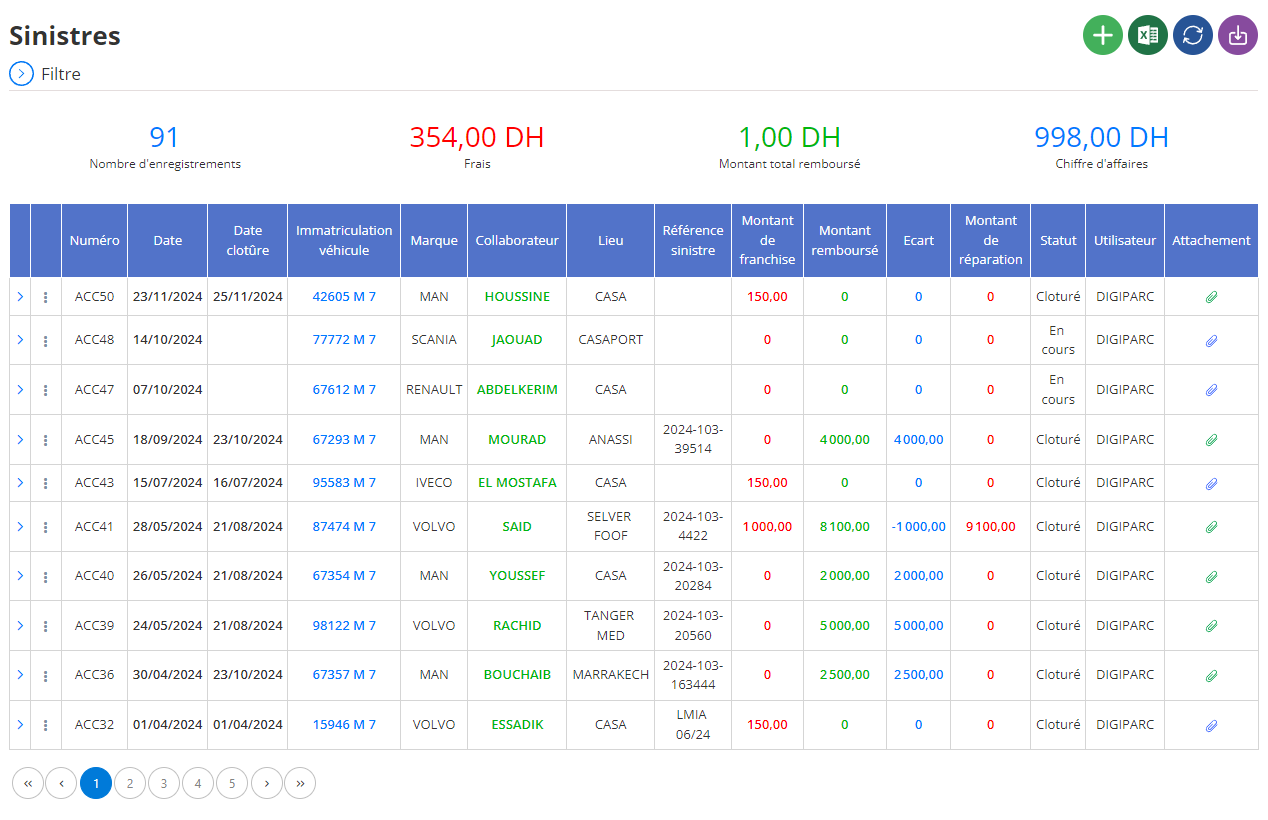
Display of claims in table
In the central table of the interface, each row corresponds to a specific claim, and the columns present key information for simplified and precise management. Here is a detailed overview of the elements available:
- Number:This column displays a unique identifier for each claim, ensuring traceability and rapid searching of corresponding information.
- Date :The precise date of occurrence of the disaster is indicated, making it possible to situate the event in time and prioritize files according to their age.
- Vehicle Code:The internal code assigned to the vehicle concerned is displayed here, making it easier to associate the claim with the correct vehicle in the vehicle fleet.
- Vehicle registration:This field specifies the license plate of the vehicle involved, reinforcing precision and allowing rapid identification in administrative files.
- Brand:La marque du véhicule est spécifiée, offrant une vue d’ensemble des sinistres associés à différentes marques dans la flotte.
- Collaborateur :Cette colonne indique le nom du conducteur ou collaborateur impliqué dans le sinistre. Cela permet de mieux comprendre les circonstances de l’incident et d’évaluer les éventuels besoins de formation en conduite.
- Kilométrage :Le kilométrage du véhicule au moment de l’incident est consigné ici, offrant des indications précieuses sur son usage au moment du sinistre.
- Lieu :Cette colonne mentionne le lieu précis où s’est déroulé le sinistre, essentiel pour analyser les zones à risque et anticiper les problèmes éventuels.
- Claims reference:A reference assigned by the insurance company or company is displayed, simplifying the management of interactions with insurers and other stakeholders.
- Taux de Responsabilité :This field indicates the percentage of responsibility attributed to the driver or third party involved, essential for assessing the financial and legal impacts of the incident.
- Excess Amount:The deductible applicable to the incident is indicated, allowing a clear anticipation of the costs borne by the company.
- Amount Reimbursed:This field shows the amount reimbursed by the insurance, giving a view of the financial returns after processing the claim.
- Gap :Any differences between planned amounts and actual amounts (reimbursements or costs) are indicated, contributing to more accurate financial management.
- Amount of Repair:The total cost of necessary repairs is displayed, making it possible to identify the most costly losses and analyze their budgetary impact.
- Status:This column describes the current status of the claim processing (in progress, closed, pending), providing visibility on the remaining or completed steps.
- User:Information concerning the user who entered or modified the claim data is mentioned, reinforcing internal traceability.
- Attachment:Documents associated with the claim (accident reports, photos, quotes, etc.) can be centralized here, facilitating access to essential information if necessary.
Claims management is crucial for any organization with a fleet of vehicles. By ensuring rigorous monitoring and offering powerful analysis tools, this module makes it possible to transform disasters into opportunities for continuous improvement. Through proactive management, businesses can not only limit costs, but also strengthen the security and overall performance of their operations.