Module · Fleet
Liste Contrats
Liste Contrats
La section dédiée aux contrats de location offre une vue complète et détaillée des engagements contractuels relatifs à la gestion des véhicules. Ce module constitue un outil essentiel pour centraliser les informations, suivre les données clés, et garantir une gestion proactive des contrats. Il facilite le contrôle des coûts, la planification des renouvellements, et l’optimisation de la flotte, tout en offrant une traçabilité totale.
Chaque contrat est documenté de manière claire et précise, permettant une consultation rapide des informations pertinentes. Cette organisation simplifie la gestion administrative, réduit les risques d’erreurs et renforce la collaboration entre les parties prenantes, qu’il s’agisse des gestionnaires, des fournisseurs ou des utilisateurs finaux.
Organisation des informations : Une vue structurée des contrats
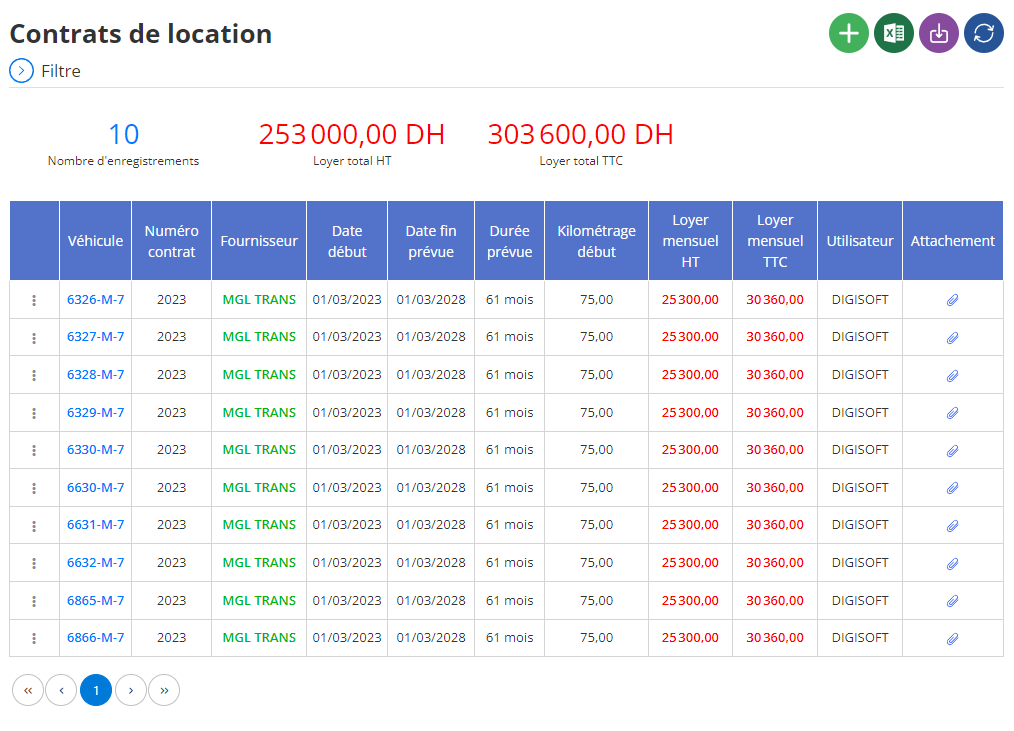
Les contrats de location sont présentés sous forme de tableau organisé, où chaque ligne correspond à un contrat spécifique, et chaque colonne détaille des informations essentielles. Voici les éléments clés :
- Véhicule :L’identification précise du véhicule concerné par le contrat, essentielle pour suivre l’historique de location de chaque unité et assurer un contrôle rigoureux de la flotte.
- Numéro Contrat :Une référence unique pour chaque contrat, permettant une traçabilité parfaite et un accès rapide aux données correspondantes.
- Fournisseur :Le nom de l’entreprise ou de l’organisme ayant fourni le véhicule en location, utile pour évaluer les partenariats et la qualité des services.
- Date Début :La date à laquelle le contrat de location a pris effet, servant de point de départ pour le suivi de la durée et des engagements.
- Date Fin Prévue :La date initialement fixée pour la fin du contrat, permettant de planifier les renouvellements ou résiliations de manière proactive.
- Date Fin Réelle :La date effective de fin de contrat, utile pour identifier les écarts avec les prévisions et analyser les retards ou les prolongations.
- Plafond Kilométrique :Le nombre maximum de kilomètres inclus dans le contrat, essentiel pour surveiller la consommation kilométrique et éviter les dépassements coûteux.
- Plafond Pneumatique :Les limites concernant l’usure ou le remplacement des pneumatiques, garantissant une gestion précise des conditions contractuelles.
- Kilométrage Début :Le relevé kilométrique du véhicule au début du contrat, servant de base pour calculer l’utilisation réelle.
- Kilométrage Fin :Le relevé kilométrique final, utilisé pour analyser la consommation totale et évaluer les éventuels frais supplémentaires.
- Durée Prévue :La durée initiale du contrat en mois ou années, permettant une planification cohérente avec les objectifs financiers de l’entreprise.
- Durée Réelle :La durée effectivement réalisée, utilisée pour mesurer les écarts avec les prévisions.
- Montant de Franchise :Le montant de la franchise applicable en cas de sinistre, une donnée cruciale pour évaluer les risques financiers associés à chaque contrat.
- Prix au Kilomètre Supplémentaire :Le coût facturé pour chaque kilomètre parcouru au-delà du plafond prévu, permettant de maîtriser les frais supplémentaires.
- Loyer Mensuel HT :Le montant mensuel hors taxes du loyer, contribuant à une analyse fine des dépenses opérationnelles.
- Loyer Mensuel TTC :Le montant total incluant les taxes, offrant une vue d’ensemble complète des engagements financiers.
- Utilisateur :Le nom ou l’identifiant de la personne en charge du contrat, assurant une traçabilité totale et une responsabilité claire.
- Attachement :La possibilité d’associer des documents tels que les contrats, les factures ou les relevés kilométriques, garantissant une centralisation des informations et un accès rapide aux pièces justificatives.
L’intégration des informations liées aux contrats de location dans un système centralisé transforme leur gestion en un véritable atout stratégique. En rassemblant les données clés dans une interface claire et accessible, les gestionnaires peuvent suivre l’état des contrats en temps réel, contrôler les dépenses et anticiper les besoins futurs.
Cette approche favorise également une collaboration fluide entre les équipes internes et les fournisseurs, garantissant une gestion efficace et conforme aux objectifs de l’entreprise. La transparence et la précision offertes par cette section renforcent la prise de décisions éclairées, permettant d’optimiser à la fois les performances de la flotte et la satisfaction des parties prenantes.
La gestion des contrats de location constitue une composante essentielle de la stratégie de gestion de flotte. En offrant une vue détaillée et exhaustive des engagements contractuels, cette section permet de centraliser les informations, de réduire les coûts, et d’optimiser les performances globales.
Grâce à une présentation claire et une organisation rigoureuse, elle simplifie le suivi des véhicules, assure une traçabilité parfaite et garantit un contrôle total sur les aspects financiers et opérationnels. En combinant transparence, anticipation et efficacité, cette gestion centralisée des contrats contribue à la réalisation des objectifs stratégiques de l’entreprise.